
On paper, the drive from San Diego to LAX looks straightforward. It's about 125 miles up the coast. But anyone who’s made the trek knows that in Southern California, miles are misleading. The real measure of this journey isn't distance; it's time. And that time is completely at the mercy of Southern California's infamous traffic.
What to Expect on Your Drive from San Diego to LAX
Think of the drive from San Diego to LAX less like a fixed road trip and more like navigating a river. Sometimes the current is smooth and fast, and other times it's a raging, slow-moving flood. Knowing when those currents shift is the secret to a painless trip.
The most direct path is Interstate 5 (I-5), which clocks in at around 125 to 126 miles. If you hit the road in the dead of night or before the sun comes up, you might make it in about 2 hours and 30 minutes. But let's be realistic—that's a rare best-case scenario. More often than not, especially on a weekend afternoon, that same drive can easily balloon to four hours, sometimes even longer.
Setting Realistic Time Expectations
The key to not missing your flight is understanding the huge gap between a perfect drive and a typical one. Here’s a quick breakdown of what you should plan for.
- Best-Case Scenario: Your best shot at a quick trip is leaving before 6:00 AM on a weekday or very late at night. This is when you might see that sub-three-hour travel time.
- Average-Case Scenario: Hitting the road mid-morning or early afternoon on a weekday usually puts you in the three-to-four-hour range. You’ll definitely hit pockets of traffic, but it’s mostly manageable.
- Worst-Case Scenario: Friday afternoons are the absolute worst. You’ve got the regular commuter rush colliding with everyone trying to get a head start on their weekend. This perfect storm of traffic can easily push your drive well past the four-hour mark.
The bottom line is this: Always assume you're going to hit traffic. Building in a generous time buffer isn't just a good idea—it's essential for making it to LAX without a panic attack.
Before you map out your route, it helps to know the city you're leaving from. A great place to start is our comprehensive San Diego travel guide, which has some useful tips for planning your departure.
San Diego to LAX Drive Time Scenarios
To give you a clearer picture, we've put together a simple table outlining what to expect based on traffic conditions. It’s a handy reference for planning when to leave.
| Scenario | Estimated Drive Time | Best Time to Travel |
|---|---|---|
| No Traffic | 2.5 – 3 Hours | Late Night (After 9 PM) / Early Morning (Before 6 AM) |
| Moderate Traffic | 3 – 4 Hours | Mid-Day Weekdays (10 AM – 2 PM) |
| Heavy Traffic | 4+ Hours | Weekday Rush Hour (7-9 AM & 3-7 PM), Friday Afternoons |
As you can see, timing is everything. A two-hour difference in your departure time can easily add two hours to your drive. Plan smart, leave early, and you'll get your trip off to a much smoother start.
Navigating The Best Routes To LAX
When you plug "LAX" into your GPS from a San Diego starting point, it's going to tell you one thing: take the I-5 North. On paper, it makes perfect sense. It’s the most direct shot up the coast, connecting two of Southern California's biggest hubs.
But as anyone who’s made this drive knows, the most direct route is rarely the fastest.
Think of your GPS as a rookie who only sees the lines on the map. This guide is the seasoned veteran who knows the turf. Understanding the main routes and their classic choke points helps you make smart, on-the-fly decisions, turning a frustrating drive into a strategic journey.
The Main Artery: I-5 North
The I-5 is the spine of this trip. It carries you up through North County San Diego, past the wide-open spaces of Camp Pendleton, and straight into the belly of the beast: Orange County. For the first hour or so, it can be a pretty smooth ride.
The trouble starts brewing as you approach the infamous "Orange Crush" interchange, where several major freeways collide. This area is a notorious bottleneck, especially during commute times.
From there, the stretch between Irvine and Anaheim often slows to a crawl for no reason you can see. Then comes the grand finale: the tangled mess of interchanges near Downtown LA. This piece of the I-5 consistently ranks among the most congested freeway segments in the entire country.
This visual breakdown shows the basic numbers for your trip, highlighting how a relatively short distance can become a major time investment without proper planning.
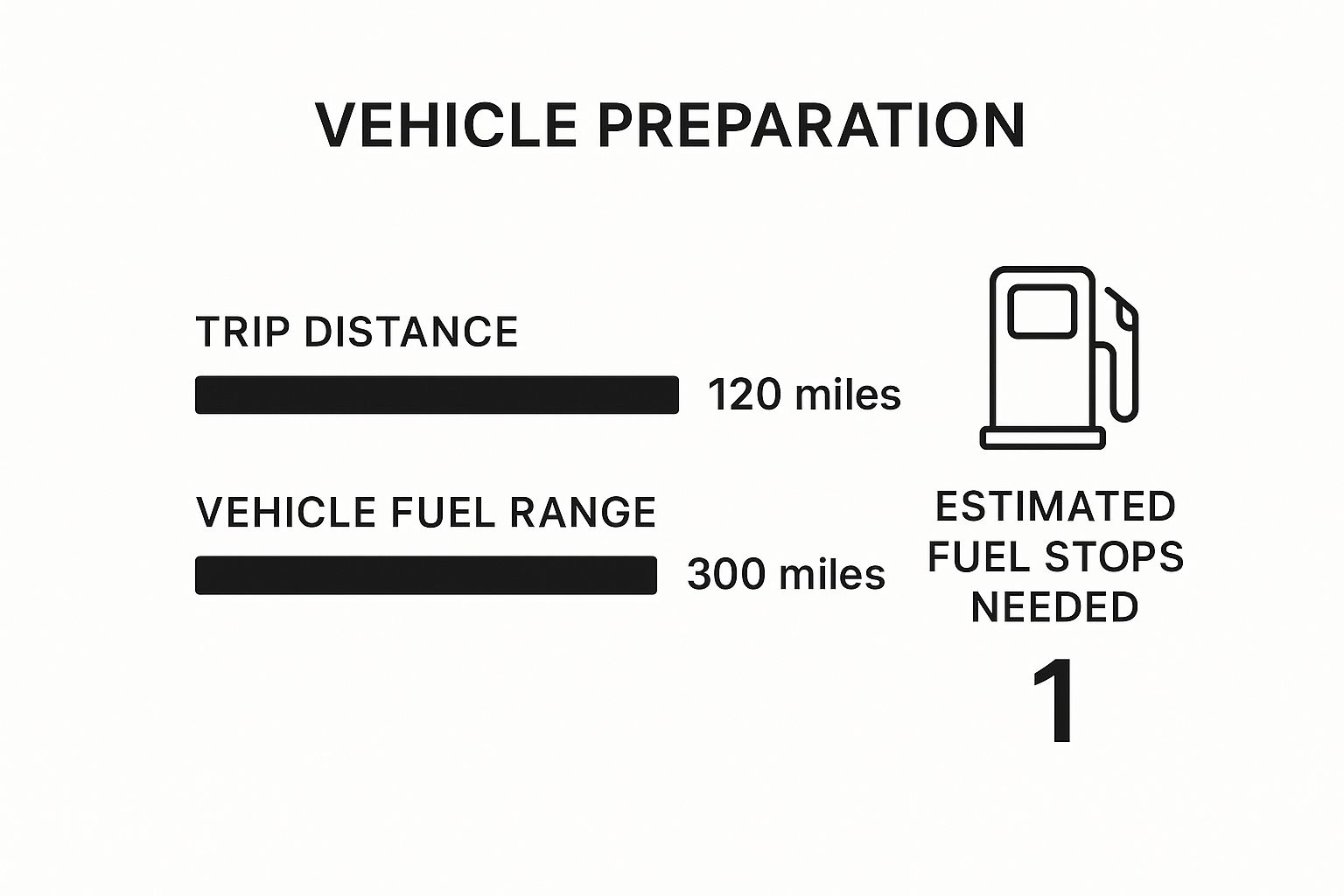
As you can see, the 120-mile trip isn't the issue. It's navigating the unpredictable journey itself that poses the real challenge.
The Key Alternative: I-405 North
The I-405, often called the San Diego Freeway, splits off from the I-5 in Irvine and presents a vital alternative. While it might look like a detour on the map, the I-405 is often the smarter play for getting to LAX. Why? It completely bypasses the Downtown LA snarl that plagues the I-5.
Instead, it guides you up the western side of the LA metro area, putting you much closer to the airport's doorstep.
Of course, the I-405 has its own demons. It's one of the busiest freeways in the United States and is legendary for its own special brand of gridlock, particularly as it cuts through the Westside of Los Angeles.
Pro Tip: Your decision to stick with the I-5 or jump over to the I-405 needs to happen before you hit the split in Irvine. Keep a real-time traffic app like Waze or Google Maps running from the moment you leave San Diego to see which route is behaving better.
Making The Right Choice In Real Time
So, which one do you pick? There's no single right answer. It's all about a dynamic strategy based on the time of day and what the traffic gods have decided for that particular moment.
To make it simple, we've broken down the pros and cons of each route. Think of this table as your cheat sheet for the drive.
Route Comparison San Diego to LAX
| Route | Pros | Cons | Best For |
|---|---|---|---|
| I-5 North | It's the most direct path on paper and can be faster during off-peak hours. | Deals with severe congestion through Downtown LA and the heart of Orange County. | Very early morning drives (think before 6 AM) or late-night trips after the rush dies down. |
| I-405 North | It cleverly bypasses the Downtown LA mess and offers a more direct approach to the airport itself. | Can have its own extreme traffic, especially on the Westside near LAX. | Most daytime travel, especially on weekday afternoons and weekends when the I-5 is a parking lot. |
At the end of the day, flexibility is your best friend. While this gives you a game plan for getting there, a successful round trip means planning for the return journey, too. Traffic patterns can be surprisingly different heading south, so be sure to check out our insights on driving from LAX to San Diego. Being prepared for both legs of the trip is the secret to a smooth, predictable, and stress-free travel day.
How to Outsmart Southern California Traffic

Making the drive from San Diego to LAX successfully isn't just about picking the right freeway—it’s about mastering the art of timing. Generic advice like "avoid rush hour" barely scratches the surface in a region with a traffic pulse as complex as Southern California's. To really outsmart the gridlock, you have to start thinking like a local and feel the rhythm of the road.
Sure, the standard commuter surges are predictable. You can always count on a heavy southbound wave into San Diego in the morning and a northbound flood leaving LA in the evening. But the simple logic of a "reverse commute" doesn't quite hold up here. This corridor is a perpetual motion machine, with serious traffic flowing in both directions at nearly all hours of the day.
The Predictable Commuter Waves
Let’s start with the basics. These are the daily constants, the traffic patterns that form the baseline for any travel plan. You have to know these before you can account for anything else.
- Morning Rush (Northbound): Kicking off around 6:30 AM and lasting until 9:30 AM, you'll hit a wall of commuters heading north from San Diego and Orange County into the LA metro area. This flow constricts the I-5 and I-405, making an early start absolutely essential.
- Evening Rush (Southbound): The reverse happens from about 3:30 PM to 7:00 PM as the workforce heads for home. Even though you’re heading north, the sheer volume of cars creates friction that causes slowdowns and bottlenecks going both ways.
It's amazing how much of a difference 30 minutes can make. Leaving San Diego at 1:30 PM, for example, might get you a smooth three-hour trip. But if you wait until 2:30 PM, you could easily be staring down a four-and-a-half-hour ordeal as you run headfirst into the leading edge of LA's infamous rush hour.
Understanding the traffic pulse isn't just about dodging the worst of it; it's about finding those small, strategic windows where the freeways can actually breathe. A slightly earlier departure isn't an inconvenience—it's your single most powerful weapon against gridlock.
Uncovering Hidden Traffic Triggers
Beyond the daily grind, a few "hidden" factors can bring the freeways to a screeching halt without warning. These are the variables that catch tourists completely by surprise but are second nature to anyone who drives these roads regularly.
1. The Weekend Beach Rush
On any sunny Saturday or Sunday, especially during the summer, the freeways become magnets for beach-goers. Expect northbound traffic to swell from mid-morning on as people flock to popular Orange County spots like Huntington or Newport Beach.
2. Major Sporting Events and Concerts
Southern California is packed with major league teams and world-class concert venues. A day game at Dodger Stadium or Angel Stadium, or a big show at the Kia Forum, can inject tens of thousands of extra cars onto the I-5 and I-405. This creates intense, localized gridlock that ripples for miles. Always check the event calendars along your route.
3. Holiday Travel Waves
The day before a major holiday like Thanksgiving or Memorial Day is notoriously bad. Traffic becomes wildly unpredictable, often starting much earlier in the day and lasting well into the night as everyone tries to get a head start.
When your flight time is set in stone, leaving these variables to chance is a huge gamble. For travelers who need absolute certainty, trusting an on-time car service is a smart move. Their professional drivers live and breathe this stuff, building these dynamic factors into every schedule.
Your Strategic Departure Plan
To pull this all together, stop planning around the clock and start planning around the region's unique rhythm. Before you even think about getting in the car, ask yourself these simple questions:
- What day of the week is it? A Tuesday morning drive is a completely different beast than a Friday afternoon.
- Is this a holiday weekend? If it is, you should add at least an extra hour to your travel buffer. No exceptions.
- Are there any major events happening? A quick Google search for stadium and venue schedules can save you a world of hurt.
Thinking this way transforms your drive from San Diego to LAX from a stressful, reactive battle into a proactive, strategic journey. You're no longer just a driver stuck in traffic; you're a navigator who understands the currents and knows exactly how to find the clearest path forward.
So, What Are Your Options Besides Driving?
The thought of that drive from San Diego to LAX can be enough to drain the energy out of you before your trip even begins. Gripping the steering wheel for hours, inching along in unpredictable gridlock… it’s a real mental grind. If that sounds less than ideal, you’re in luck. There are a few other ways to make the trip, each with its own trade-offs between cost, convenience, and how long it really takes.
Wrestling with freeway traffic isn't your only choice. Thinking through these alternatives helps you figure out what you truly value for this particular trip. Is it saving every possible dollar? Is it minimizing stress? Or is it simply getting there as fast as humanly possible?
Let's break down the most common ways people try to avoid the drive.
Hopping on the Train to Los Angeles
For a lot of people, the train sounds like a fantastic idea. And in many ways, it is. The Amtrak Pacific Surfliner offers a genuinely pleasant, scenic ride up the coast from San Diego's Santa Fe Depot to Union Station in downtown L.A. You can kick back, get some work done, or just watch the ocean roll by without a single thought about traffic.
But here’s the catch: once you step off the train at Union Station, your journey is far from over. LAX is still a solid 18 miles away, and now you have a whole second leg of the trip to figure out. Your main options from there are:
- The LAX FlyAway Bus: This is a direct shuttle from Union Station to the airport. It’s affordable and comes around pretty often, but it throws you right back onto the same freeways you were trying to avoid. Your arrival time is completely at the mercy of L.A. traffic.
- Rideshare or Taxi: A more direct route to your terminal, sure, but the price can be steep, especially during peak hours. And just like the bus, you’re stuck if traffic is bad.
- Public Transit: This is your most budget-friendly path, involving a mix of metro rail and bus lines. But it's easily the most time-consuming and a real pain if you're wrestling with luggage.
The Shared Shuttle Gamble
Shared shuttle services are another popular choice, sort of a middle ground between public transit and a private car. They pick up several passengers heading in the same general direction, which helps keep the cost down. Plus, someone else is doing the driving.
The big downside is time and a meandering route. Your "direct" trip to LAX could easily include several detours to pick up other people around San Diego or drop them off at different terminals. This can add a significant and totally unpredictable amount of time to your journey, easily turning a three-hour trip into a four or even five-hour ordeal.
The Short Flight from SAN to LAX
On paper, flying seems like a no-brainer. The aerial distance is only about 109 miles, and the flight itself is usually under an hour. It has to be the fastest way, right?
Not so fast. The time you spend in the air is just a tiny piece of the puzzle. Once you add up the time it takes to get to the airport, check in, slog through security, board the plane, and deal with potential delays, the total journey averages around 3 hours and 26 minutes. That "saved" time in the air gets completely eaten up by all the hassle on the ground at both airports.
The core challenge is the same with all these options: you're still left trying to efficiently bridge the gap from your starting point to the airport terminal. The train leaves you stranded downtown, shuttles take you on a tour of the county, and flying just swaps road traffic for airport queues.
Each alternative asks you to make a compromise. You might save a little money but lose a lot of time, or you might get a relaxing ride but add the complexity of a mid-journey transfer. For anyone looking for a truly seamless door-to-terminal experience, it becomes clear that these options introduce their own logistical headaches.
Sometimes, a dedicated transport from San Diego to LAX is the only way to get that perfect blend of efficiency and comfort without having to make those frustrating trade-offs.
Why a Chauffeured Car Service Is Your Best Bet
After looking at the grind of driving yourself and the trade-offs of other options, one thing becomes crystal clear: the San Diego to LAX run is its own unique beast. This isn't just a trip from A to B. It’s about showing up for your flight with your energy and sanity intact.
This is exactly where a professional chauffeured car service completely changes the game. Forget the old idea of it being pure extravagance—think of it as a smart investment in your own well-being and efficiency. You go from being a stressed-out driver to a relaxed and productive passenger.
Reclaiming Your Most Valuable Asset: Time
Picture this: two people are leaving San Diego for the same flight at LAX.
One is behind the wheel, constantly glancing at traffic apps, gripping the steering wheel a little too tight through every slowdown, and just praying they make it to the terminal on time. Their journey is an exhausting, mentally draining chore.
The other person settles into the back of a spotless luxury sedan. They spend the next few hours firing off emails, making important phone calls, or just unwinding with a playlist. For them, that 2.5-to-4-hour travel window isn't lost; it’s found time. It’s a productive part of their workday or a peaceful start to their vacation.
That’s the real value a chauffeured service provides. It takes those stressful, wasted hours stuck in traffic and turns them into something useful.
A professional car service doesn't just get rid of the problems of the drive; it replaces them with productivity and calm. You're not just buying a ride—you're buying back your time and focus.
The Power of Predictability and Expertise
Southern California traffic is the very definition of unpredictable. One accident on the I-5 or a surprise jam on the I-405 can completely blow up the most carefully planned timeline. A professional chauffeur, on the other hand, lives and breathes this chaos every single day.
These drivers have a sixth sense for the local traffic pulse. They know the back roads, they understand when and where the worst choke points happen, and they use sophisticated tools to monitor conditions in real-time. They aren't just blindly following a GPS; they’re making strategic moves to find the smoothest path forward.
This level of expertise gives you a few major advantages:
- Guaranteed On-Time Arrival: Professionals don’t guess. They build in precise time buffers based on years of real-world experience.
- Seamless Door-to-Terminal Service: You get picked up right at your doorstep and dropped off directly at your airline's terminal. That infamous LAX parking hunt? Not your problem.
- Zero Logistical Worries: Forget about finding and paying for long-term parking, gassing up the car, or dragging your luggage across a massive parking garage.
When you hand the reins to a professional, you eliminate every single variable that creates travel anxiety. The trip becomes a smooth, predictable, and managed process—which is exactly what you need before catching a flight.
A Smart Investment, Not Just an Expense
At first glance, a private car might seem like the priciest option. But when you start to add up the real costs of driving yourself, the value proposition gets a lot clearer. Let’s look at the hidden costs of a self-drive:
- Gasoline: That round-trip mileage adds up quickly, especially with today's fuel prices.
- LAX Parking: Parking on-site at the airport can easily run you $50 per day or more. For a week-long trip, that’s $350 just for your car to sit there.
- Vehicle Wear and Tear: The 250-mile round trip puts real strain on your car, from tires to oil changes.
- The Value of Your Time: What’s an extra three or four hours of focused work or stress-free relaxation actually worth to you?
When you do the math, a premium service is often surprisingly competitive, particularly for longer trips. Choosing an executive chauffeur service from San Diego to LAX isn't an indulgence; it's a practical decision for a better, more efficient travel day. It’s the only way to guarantee your trip starts and ends with absolute ease.
Your San Diego to LAX Pre-Travel Game Plan
We've covered the routes, the traffic nightmares, and your best bets for getting there. Now, it's time to put all that knowledge into practice. A smooth trip to LAX doesn't just happen by accident; it's the result of a little smart planning.
Think of this as your simple, actionable game plan. Follow these steps, and you'll trade potential travel stress for the quiet confidence of knowing you've got everything handled.
Phase 1: The Week Before Your Flight
Getting the big stuff locked down early is the foundation of a hassle-free travel day. This is where you set yourself up for success long before you even think about packing.
- Book Your Ride: Seriously, don't put this off. Whether you're booking a professional car service or another option, get it confirmed. Waiting until the last minute is a recipe for surge pricing and zero availability.
- Become a Traffic Spy: Use an app like Waze to check the drive at the exact time and day you plan to leave. Do this a couple of times throughout the week to get a real-world picture of what you're up against.
- Triple-Check Flight Details: Confirm your flight number and departure time. But most importantly, find out your exact departure terminal at LAX. It's a massive place, and knowing where you're going is critical.
Phase 2: The Day Before Departure
Your main plan is in place. Today is all about the final details that make the morning of your flight smooth and predictable.
- Pack Your "Car Bag": That drive can feel long. Get a small bag ready with the essentials: a water bottle, a few snacks, charging cables, and any medications you might need close at hand.
- The Two-App Strategy: Download both Waze and Google Maps. Sometimes, one app catches an accident or a sudden closure that the other misses. Comparing them right before you leave can be a game-changer.
- Set Backup Alarms: If you have an early start planned to beat the morning rush, don't rely on a single alarm. Set a backup. It’s a simple trick that has saved many travelers from a last-minute panic.
A successful trip to LAX isn't about one big, heroic decision. It's about a series of small, smart preparations. Every item you check off this list is another layer of insurance against stress and delays.
Phase 3: The Day of Your Trip
It's go-time. This is where all that prep work pays off.
- The Final Traffic Check: Right before you walk out the door, pull up your traffic apps one last time. This is your final chance to spot any brand-new accidents or unexpected road closures.
- Leave When You Planned: You built a buffer into your departure time for a reason. Stick to it. Resist the siren song of "just five more minutes."
- Know Your Terminal Drop-Off: Have your terminal number ready for your driver. LAX is a confusing loop of terminals, and telling your driver exactly where to go makes that final approach quick, efficient, and painless.
Your Questions, Answered
Even the most seasoned travelers have a few questions before tackling the drive from San Diego to LAX. Let's clear up some of the most common ones so you can hit the road with confidence.
What Is The Absolute Worst Time to Drive?
Hands down, the times to avoid are Friday afternoons from 2 PM to 7 PM and Sunday afternoons from 3 PM to 8 PM. This is the perfect storm of weekday commuters mixing with the weekend getaway crowd, a recipe for a traffic jam that can easily push your drive past the four-hour mark.
Should I Take The I-5 Or I-405?
As you get closer to the LA metro area, your main goal is LAX, which sits right off the I-405. The I-5 will pull you further east toward downtown Los Angeles, a detour that almost guarantees you’ll hit some of the city's most notorious traffic. Stick to the I-405 for the most direct shot.
The best move? Let your phone be your co-pilot. Fire up a real-time traffic app like Waze or Google Maps the second you leave San Diego. It will constantly analyze the live situation and find the quickest path, making adjustments on the fly.
How Much Extra Time Should I Allow?
A good rule of thumb is to figure out your best-case-scenario drive time (which is about 2.5 hours) and then tack on a buffer of at least 90 minutes.
If you know you’re driving during rush hour or on a chaotic Friday, bumping that buffer up to a full two hours is the smarter, safer bet. Trust me, it’s far better to be early and relaxed at a terminal coffee shop than sprinting to your gate.
Is A Car Service More Expensive Than Parking?
For any trip that lasts more than a couple of days, a private car service often ends up being the more sensible financial choice. It sounds surprising, but when you see on-site LAX parking rates climbing above $50 per day, that bill can get painfully high after a week-long trip.
Once you add in the cost of gas, the wear and tear on your own car, and—most importantly—the value of your time and sanity, a professional chauffeur often delivers far more value. You skip the parking sticker shock and, better yet, the stress of the drive itself.
Ready to take the guesswork out of your airport transfer? For a reliable, luxurious, and perfectly timed arrival, book your private transport with Pompeii Limousine and see what a truly stress-free journey feels like. Learn more about our premium airport car services.


