
Traveling with pets sounds simple enough until you realize there is a world of complexity behind every trip. Even though over 2 million pets fly on U.S. airlines each year, many owners still overlook hidden challenges like legal paperwork, health checks, and stress signals. The real surprise is that a successful pet journey depends less on the mode of travel and more on whether you can recognize and respond to your animal’s unique needs before you even leave home.
Table of Contents
- Understanding The Importance Of Traveling With Pets
- What To Consider Before Traveling With Pets
- How Different Modes Of Travel Affect Pets
- Recognizing Pet Behavior During Travel
- Planning For A Successful Trip With Your Pet
Quick Summary
| Takeaway | Explanation |
|---|---|
| Plan thoroughly for pet travel | Successful trips demand careful planning that includes health, behavior, and transportation needs of your pet. |
| Consult with a veterinarian | Scheduling a health check helps identify risks and ensures your pet is travel-ready with necessary vaccinations. |
| Understand legal travel requirements | Research and comply with regulations like health certificates and restrictions to prevent issues during the journey. |
| Monitor your pet’s stress levels | Recognize signs of anxiety or discomfort to address issues promptly and ensure your pet’s well-being during travel. |
| Gradually acclimate your pet | Prepare your pet by introducing them to travel environments and equipment to reduce anxiety and promote comfort. |
Understanding the Importance of Traveling with Pets
Traveling with pets requires thoughtful preparation and understanding beyond basic logistics. Pet travel represents a complex interaction between animal welfare, legal requirements, and owner responsibility. While many pet owners view trips as simple transportation scenarios, successful journeys demand comprehensive planning and strategic considerations.
Pet Travel as a Holistic Experience
Pet travel is not merely about moving an animal from one location to another. According to the CDC Pet Travel Guidelines, comprehensive preparation involves multiple critical factors that ensure both animal safety and owner peace of mind. These factors include health documentation, vaccination status, behavioral readiness, and understanding specific transportation regulations.
Key Considerations for Pet Travel
- Animal health and medical requirements
- Psychological preparedness of the pet
- Transportation method and legal restrictions
- Potential stress and adaptation challenges
Health and Safety Priorities
Understanding your pet’s physical and emotional capabilities during travel is paramount. Different animals respond uniquely to transportation environments. Some pets experience significant anxiety, while others adapt more readily. Veterinary consultation becomes crucial in assessing an individual animal’s travel suitability.
Professional veterinarians recommend comprehensive health checks before any extended journey. These examinations help identify potential health risks, determine necessary vaccinations, and provide tailored advice for managing your pet’s specific travel needs. Microchipping, updated vaccination records, and understanding potential motion sickness risks are fundamental aspects of responsible pet travel preparation.
Legal and Regulatory Landscape
Travel regulations surrounding pets are complex and vary significantly across different jurisdictions. Owners must navigate intricate requirements that might include breed restrictions, mandatory health certificates, quarantine protocols, and specific transportation guidelines. Research and proactive planning can help prevent unexpected complications during your journey.
By approaching pet travel as a comprehensive experience rather than a simple logistical challenge, pet owners can create safer, more enjoyable experiences for themselves and their animal companions.
What to Consider Before Traveling with Pets
Pet travel demands meticulous preparation that extends far beyond packing a few essentials. Successful journeys require comprehensive planning that addresses multiple dimensions of animal welfare, transportation logistics, and individual pet characteristics. Understanding these nuanced considerations can transform potentially stressful travel experiences into smooth, enjoyable adventures.
Individual Pet Assessment
Before embarking on any journey, conducting a thorough evaluation of your pet’s physical and psychological readiness is crucial. Not every animal is suited for extensive travel, and recognizing your pet’s unique temperament becomes the foundation of responsible trip planning. Some animals experience significant stress during transportation, while others adapt more seamlessly to new environments.
Critical Evaluation Factors
- Overall health status
- Age and physical endurance
- Previous travel experiences
- Individual anxiety levels
- Specific breed characteristics
Medical and Documentation Preparedness
According to the USDA APHIS Pet Travel Guidelines, comprehensive medical documentation represents a non-negotiable aspect of pet travel. Professional veterinary consultation helps identify potential health risks and ensures your animal companion meets all necessary travel requirements. This process involves more than routine checkups.
Essential Medical Documentation
- Updated vaccination records
- Health certification
- Microchip identification
- Travel-specific health assessments
- Medication and emergency contact information
Transportation Mode Considerations
Each transportation method presents unique challenges and requirements for pet travel. Whether planning a road trip, airline journey, or international expedition, understanding specific regulations and preparing accordingly becomes paramount. Different modes of transportation have distinct pet accommodation protocols, safety standards, and potential restrictions.
Airline travel, for instance, involves complex regulations regarding carrier sizes, weight limitations, and breed-specific guidelines. Road trips require specialized safety equipment like secure carriers, harnesses, and strategies for managing potential motion sickness. International travel introduces additional layers of complexity, including quarantine regulations and country-specific pet import requirements.
By approaching pet travel as a comprehensive planning process that prioritizes animal welfare and legal compliance, travelers can create safer, more enjoyable experiences for both themselves and their animal companions.
How Different Modes of Travel Affect Pets
Pet transportation is not a one-size-fits-all experience. Different travel modes introduce unique physiological and psychological challenges that can significantly impact an animal’s comfort and well-being. Understanding these nuanced effects helps pet owners make informed decisions and implement appropriate strategies to minimize stress and potential health risks.
Psychological Impact of Transportation
Travel environments create complex sensory experiences that can trigger varying emotional responses in pets. Some animals perceive transportation as threatening, while others might find the experience mildly stimulating or even exciting. Factors such as noise levels, movement patterns, and confined spaces play critical roles in determining an animal’s psychological response.
Psychological Stress Indicators
- Increased heart rate
- Excessive panting
- Trembling or shaking
- Withdrawal behaviors
- Vocalization or whimpering
Physiological Responses to Travel Modes
According to the ASPCA Pet Travel Safety Guidelines, different transportation methods produce distinct physiological challenges. Airline travel, for instance, exposes pets to dramatic environmental changes including altitude shifts, pressurization, and temperature variations. These factors can induce significant physical stress, potentially affecting respiratory and cardiovascular systems.
Physiological Travel Considerations
- Temperature regulation difficulties
- Potential motion sickness
- Dehydration risks
- Muscle tension and fatigue
- Potential immune system suppression
Comparative Transportation Risks
Each travel mode presents specific risks and potential complications.
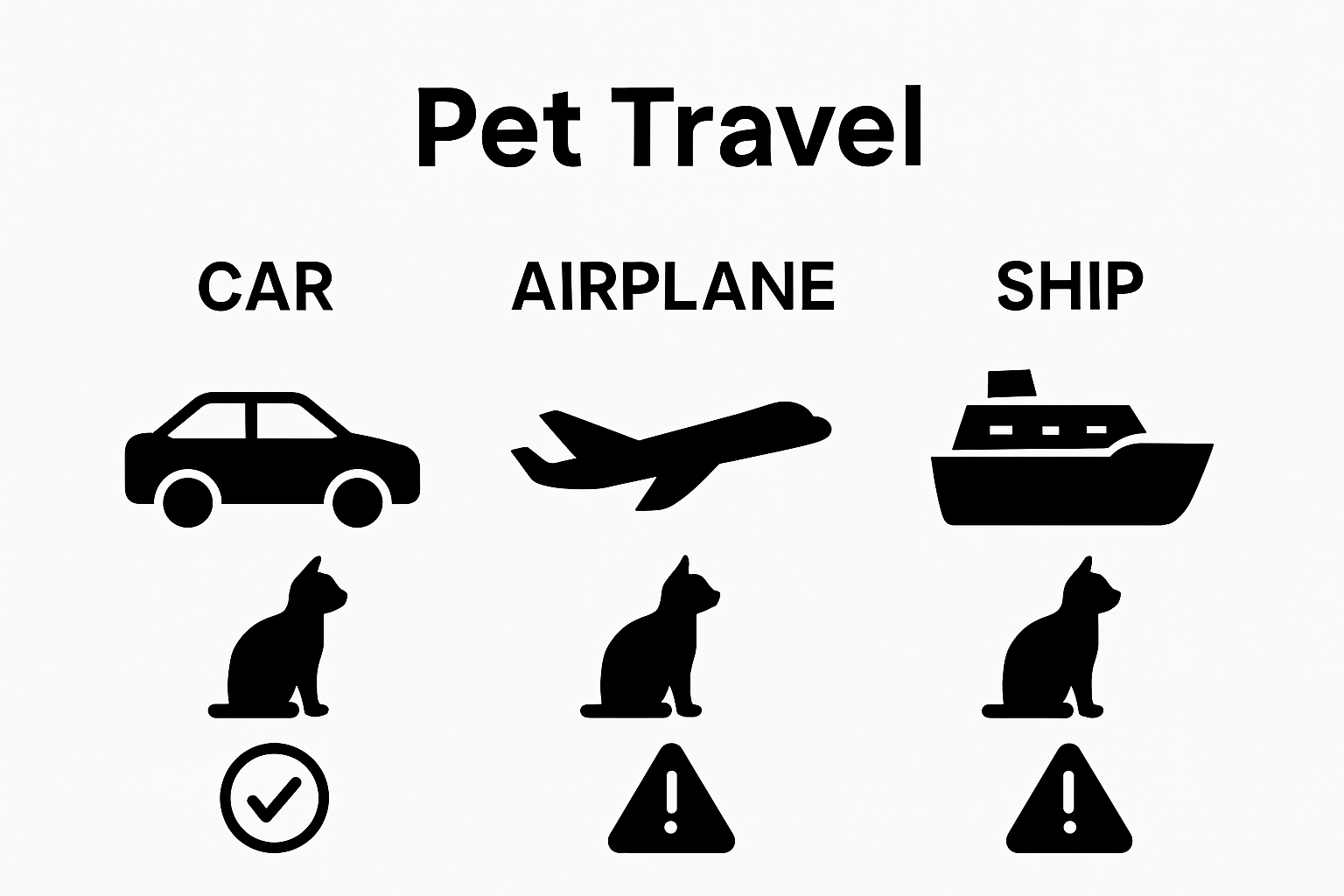 Car travel offers more direct control and flexibility but requires careful restraint and periodic breaks. Airline transportation involves strict regulations and potential cargo environment challenges. Train and boat travel present their own unique sets of environmental and logistical considerations.
Understanding these nuanced differences allows pet owners to develop targeted strategies that mitigate potential negative experiences.
To help travelers understand how each mode of transportation can impact their pets, the following table compares key characteristics and risks for car, airline, train, and boat travel.
| Travel Mode | Key Characteristics | Common Risks or Challenges |
|---|---|---|
| Car | Flexibility, control over schedule | Unrestrained pets, risk of escapes during stops, motion sickness, need for regular breaks |
| Airline | Strict regulations, speed | Cargo stress, temperature shifts, pressure changes, carrier size/breed limits, anxiety |
| Train | Variable pet policies, stable ride | Limited acceptance of pets, space restrictions, unfamiliar noise and crowd exposure |
| Boat | Unique environment, new stimuli | Seasickness, safety hazards (water), limited pet facilities, risk of escapes on deck |
By recognizing the complex interplay between transportation modes and animal physiology, responsible pet owners can make informed decisions that prioritize their companions’ comfort and well-being.
Recognizing Pet Behavior During Travel
Pet behavior during travel represents a complex interaction between an animal’s psychological state and environmental stimuli. Understanding these behavioral nuances becomes crucial for creating safe, comfortable transportation experiences. Pets communicate their comfort and stress levels through subtle and overt signals that require careful observation and interpretation.
Stress Response Indicators
Animals exhibit distinctive behavioral patterns when experiencing travel-related stress. These responses vary significantly across different species and individual temperaments. Some pets display immediate, obvious signs of distress, while others might manifest more subtle psychological and physiological reactions that demand attentive recognition.
Prominent Stress Manifestations
- Excessive panting
- Trembling or shaking
- Attempts to hide or retreat
- Increased vocalization
- Sudden changes in body posture
Behavioral Adaptation Mechanisms
According to CDC Pet Travel Guidelines, understanding an animal’s psychological adaptation process is fundamental to managing travel experiences. Some pets develop coping strategies through gradual exposure, while others require more comprehensive behavioral interventions to manage transportation-related anxiety.
Behavioral Adaptation Strategies
- Systematic desensitization
- Positive reinforcement techniques
- Creating predictable travel routines
- Maintaining familiar comfort objects
- Establishing consistent environmental boundaries
Communication and Comfort Signals
Pets communicate their travel experience through intricate body language and behavioral signals. Experienced pet owners learn to distinguish between temporary discomfort and genuine distress. Factors such as previous travel experiences, individual personality, and specific environmental conditions significantly influence an animal’s behavioral responses.
Recognizing these behavioral nuances allows pet owners to implement targeted strategies that mitigate stress and create more positive travel experiences. By developing a deeper understanding of their pets’ communication methods, travelers can anticipate potential challenges and proactively address them before they escalate.
Ultimately, successful pet travel hinges on observant, empathetic owners who can interpret and respond to their companions’ unique behavioral language.
The following table summarizes common stress indicators, adaptation mechanisms, and comfort signals to help owners recognize and address their pet’s needs during travel.
| Behavioral Aspect | Examples/Indicators | Purpose for Owner |
|---|---|---|
| Stress Indicators | Excessive panting, trembling, hiding, vocalizing, posture changes | Signal need for intervention or comfort |
| Adaptation Mechanisms | Systematic desensitization, positive reinforcement, travel routines | Methods to help your pet handle unfamiliar environments |
| Communication Signals | Body language, comfort objects, predictable behavior after acclimatization | Identify when your pet is comfortable or still adjusting |
Planning for a Successful Trip with Your Pet
Successful pet travel transcends simple transportation logistics. It represents a comprehensive strategy that integrates animal welfare, legal compliance, and proactive preparation. Each journey requires a nuanced approach that considers the unique characteristics of both the pet and the travel environment, transforming potential challenges into manageable experiences.
Comprehensive Pre-Travel Assessment
Pre-travel preparation involves a holistic evaluation of your pet’s physical and psychological readiness. This assessment goes beyond basic health checks, requiring a deep understanding of your animal’s individual temperament, potential stress triggers, and specific travel requirements. Not every pet is equally suited for extended journeys, making personalized planning critical.
Critical Pre-Travel Evaluation Factors
- Current health status
- Age and physical resilience
- Previous travel experiences
- Individual anxiety thresholds
- Specific breed vulnerabilities
Documentation and Legal Preparedness
According to the USDA Animal and Plant Health Inspection Service, comprehensive documentation represents the foundation of successful pet travel. Professional veterinary consultation helps identify potential health risks and ensures compliance with complex travel regulations. This process involves meticulously preparing multiple layers of documentation that validate your pet’s travel eligibility.
Essential Travel Documentation
- Updated vaccination records
- Health certification
- Microchip identification details
- Emergency medical information
- Destination-specific entry requirements
Psychological and Physical Preparation Strategies
Preparing your pet for travel involves gradual acclimatization and strategic intervention. This process includes familiarizing your animal with travel equipment, creating positive associations with transportation environments, and developing coping mechanisms that reduce potential stress.
Successful preparation transforms travel from a potentially traumatic experience into a manageable adventure.
Implementing targeted strategies such as incremental exposure to travel scenarios, utilizing calming techniques, and maintaining consistent routines can significantly enhance your pet’s travel experience. By approaching pet travel as a comprehensive, empathetic process, owners can create safer, more comfortable journeys that prioritize their companion’s well-being.
Experience Worry-Free Pet Travel with Trusted Luxury Transportation
If planning a trip with your pet fills you with concern about their comfort, safety, and adapting to unfamiliar environments, you are not alone. The article highlights real challenges such as navigating complex regulations, ensuring your pet’s psychological well-being, and managing every detail from health checks to travel documentation. You want every aspect of your journey to be stress-free for you and your companion.

Let us help you put those worries to rest. With Pompeii Limousine’s luxury transportation, you gain peace of mind through professionalism, flexibility, and a fleet designed for maximum comfort—for both you and your pet. Our experienced chauffeurs understand the importance of animal safety and personalized care, so your pet enjoys a calm ride while you handle your travel checklist. Instead of figuring out pet-friendly routes on your own, rely on a premium service that specializes in thoughtful, detailed transportation. Secure your next trip now on https://pompeiilimousine.com and start your journey in comfort. Book your trusted ride today and experience the difference for you and your pet.
Frequently Asked Questions
What should I consider when planning to travel with my pet?
When planning to travel with your pet, consider their health status, psychological readiness, and the mode of transportation. Assessing factors like their age, previous travel experiences, and individual anxiety levels is crucial for a successful trip.
What type of medical documentation do I need for traveling with my pet?
You need updated vaccination records, a health certification from a veterinarian, and microchip identification. Ensure you have any travel-specific health assessments and emergency medical information as well.
How can I help my pet adjust to the travel environment?
Gradually acclimate your pet to travel scenarios using systematic desensitization techniques, positive reinforcement, and maintaining familiar comfort objects. Establishing a predictable travel routine can also enhance their experience.
What are the physiological effects of traveling with pets by plane?
Airline travel can expose pets to altitude shifts, pressurization, and temperature changes, which may affect their respiratory and cardiovascular systems. Proper preparation and understanding of airline regulations are essential to minimize these risks.


