
Table of Contents
- 1. Never Miss a Pickup with Live Flight Tracking
- 2. Optimize Driver Dispatch and Reduce Wait Times
- 3. Improve Client Communication and Transparency
- 4. Minimize Stress During Complex Travel Itineraries
- 5. Enhance Schedule Coordination Across Multiple Stops
- 6. Ensure Professional First Impressions for Executive Clients
- 7. Maximize Vehicle Utilization and Operational Efficiency
- Frequently Asked Questions (FAQ)
1. Never Miss a Pickup with Live Flight Tracking
Flight delays happen constantly. A 10-minute delay on the tarmac, a gate change, or a mechanical issue can throw off your entire ground transportation plan if you’re relying on scheduled arrival times alone. Real-time flight tracking means we know the exact moment your passenger’s aircraft touches down, not when the airline predicted it would hours earlier.
Our drivers receive live flight updates throughout the journey, eliminating the guesswork. If a flight is delayed, we adjust driver dispatch accordingly rather than having them sitting idle at the curb for 45 minutes. If a flight lands early, we’re already in position. This responsiveness ensures that when your executive client exits baggage claim, their chauffeur is ready, not circling the airport or stuck in traffic.
The operational impact is direct: zero missed pickups, no angry calls from stranded executives, and no reputation damage from unreliable ground transportation. When you integrate flight monitoring into your airport transfer process, you eliminate one of the biggest sources of corporate travel friction.
What to do next: Ask your transportation provider if they offer real-time flight integration. If they’re still relying on scheduled times or client callbacks, that’s a red flag.
2. Optimize Driver Dispatch and Reduce Wait Times
One of the biggest inefficiencies in airport transportation is poor dispatch timing. Without flight data, companies either dispatch drivers too early (wasting fuel and labor hours) or too late (risking arrival delays). Both scenarios hurt your bottom line.
Real-time flight monitoring lets us dispatch drivers in a precision window. If a flight is 30 minutes out, we dispatch 25 minutes before expected landing. If there’s a two-hour delay, we hold the driver on another assignment or route them efficiently through the region. This optimization means:
- Reduced idle time at airport terminals
- Lower fuel consumption per trip
- Better driver productivity across multiple bookings
- Measurable cost savings without compromising service quality
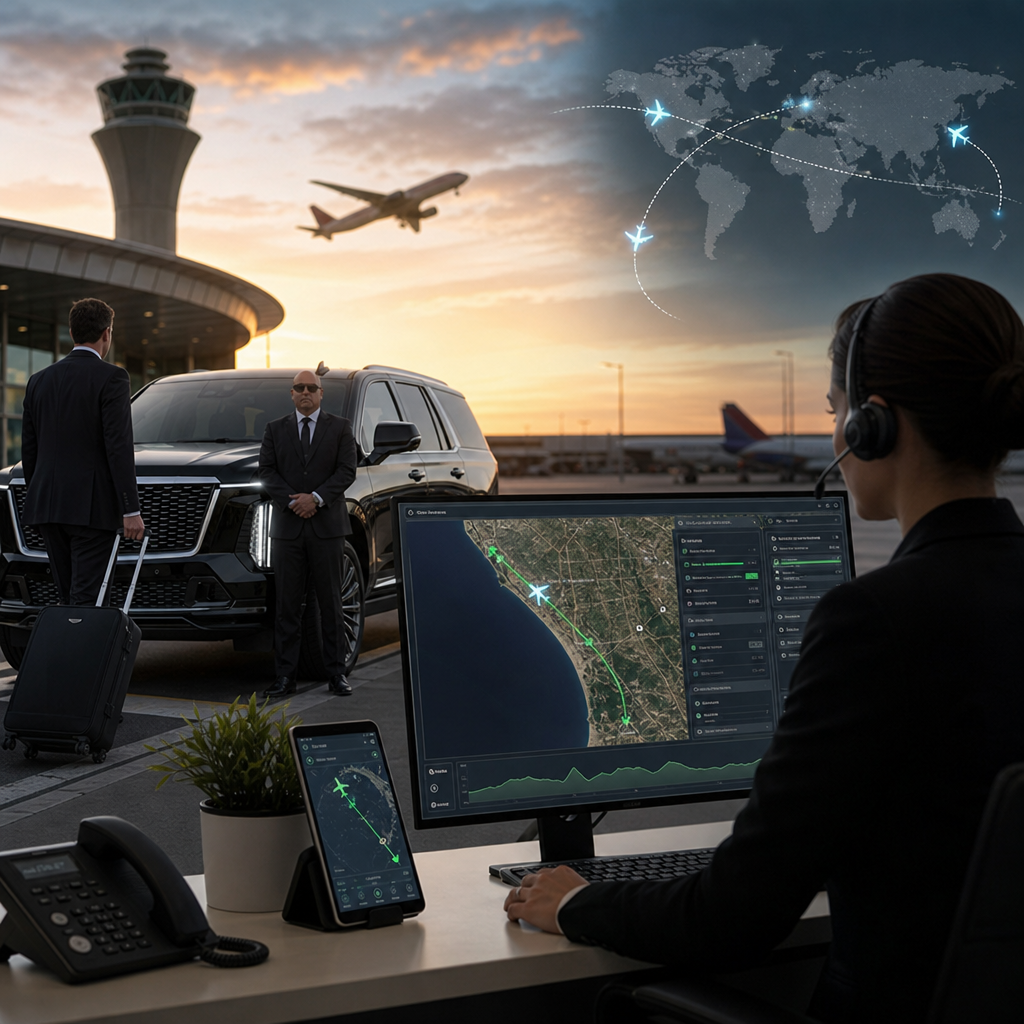
For corporate programs managing dozens of monthly airport transfers, this efficiency compounds quickly. You’re not padding schedules with buffer time or paying for unnecessary standby hours.
What to do next: Track how much idle time your current fleet experiences at airports. That’s money sitting in a parking lot that flight monitoring can reclaim.
3. Improve Client Communication and Transparency
Your traveling executives want to know their ground transportation is confirmed and on track, especially on high-stakes business trips. Real-time flight monitoring enables proactive communication that builds confidence and eliminates anxiety about ground logistics.
When we know a flight status changes, we immediately notify clients with updated arrival information and confirmation that their driver is adjusting accordingly. Instead of your executive wondering if their car will be there, they receive a message: “Your flight is on schedule to land at 5:42 PM. Your chauffeur is en route and will meet you at Terminal 2 baggage claim.”
This transparency does more than provide information. It demonstrates operational control and attention to detail, which directly impacts how clients perceive your organization’s professionalism. In corporate settings, that perception matters enormously. When ground transportation is handled flawlessly, clients notice. When it’s chaotic, they notice that too.
What to do next: Commit to sending one proactive status update to your executive clients during every airport transfer, triggered by actual flight data rather than guesswork.
4. Minimize Stress During Complex Travel Itineraries
Corporate travel often isn’t a simple point-to-point transfer. An executive might have a 6 AM pickup from home, a connection at an intermediate airport, a multi-hour layover, and arrival at a final destination with a 2 PM client meeting. Real-time flight monitoring keeps all these moving pieces synchronized.
We track each flight segment, coordinate timing across multiple legs, and ensure that ground transportation is positioned correctly at each stop. If the first leg is delayed, we know immediately and adjust the second pickup accordingly. If there’s a tight connection risk, we have contingency protocols ready.
The result is that your traveling executive focuses on business, not logistics. They don’t spend mental energy worrying about whether their connection will be covered or if their final ride will be late. That peace of mind has genuine business value, especially for time-sensitive meetings or critical client presentations.
What to do next: When booking multi-leg trips, specify all flight numbers upfront so your provider can monitor each segment independently and build contingency time into the schedule only where it’s actually needed.

5. Enhance Schedule Coordination Across Multiple Stops
Many corporate travelers need more than a simple airport transfer. They need coordinated ground transportation across multiple cities, often within the same trip. One client might need a pickup in San Diego, an airport transfer to Los Angeles, then ground transportation to a meeting venue. Real-time flight monitoring across all legs ensures nothing falls through the cracks.
Integrating flight tracking across multi-city itineraries creates a seamless travel experience regardless of complexity. Each segment is monitored, each driver is coordinated, and each transition is smooth. This level of integration is difficult for smaller services to match because it requires both technology infrastructure and operational discipline.
For companies managing executive travel programs, this coordinated approach eliminates the need to book with multiple providers. You have one trusted partner handling the entire ground transportation network, which reduces administrative burden and ensures consistent service quality across all legs.
What to do next: Consolidate your ground transportation bookings with a single provider that can see your entire multi-city itinerary in one system, rather than splitting bookings across three different regional vendors.
6. Ensure Professional First Impressions for Executive Clients
When a high-value client or executive prospect arrives at an airport, the quality of their ground transportation shapes their first impression of your organization before any business conversation even begins. A chauffeur waiting with a mismatched sign, uncertainty about the client’s flight status, or confusion about arrival details conveys disorganization. Real-time flight monitoring prevents these scenarios entirely.
Our drivers have confirmed flight information, know exactly when passengers are deplaning, and arrive with professional precision. The experience is seamless from terminal exit to vehicle departure. This attention to detail signals to clients that your organization operates with the same level of professionalism and care they should expect from your business relationship.
For companies competing on service excellence, airport transportation quality is a surprisingly important differentiator. Clients remember arriving at a destination with a flawlessly executed ground transfer far more than they remember generic flights.
What to do next: Brief your executive team on how airport transfers reflect on company reputation. Make it clear that reliable ground transportation is as much a part of the first impression as conference room setup or meeting punctuality.
7. Maximize Vehicle Utilization and Operational Efficiency
Fleet management becomes dramatically more efficient when you have real-time visibility into flight arrivals. Instead of blocking vehicles based on conservative schedule assumptions, you can allocate them dynamically based on actual flight data. This flexibility enables higher vehicle utilization across your corporate transportation program.

A sedan booked for a 3 PM arrival that’s delayed to 4:30 PM can be reassigned to another job in the interim, then repositioned for the delayed pickup. Without flight monitoring, that vehicle sits idle for 90 minutes, representing pure waste. With real-time tracking, your fleet works harder and your per-trip cost decreases.
For businesses running corporate car service programs, this operational leverage translates directly to improved profitability while maintaining or even improving service reliability. You’re operating smarter, not just harder. Real-time flight monitoring isn’t a luxury feature. It’s foundational infrastructure for corporate airport transfers that actually work.
What to do next: Calculate your current cost per mile for corporate airport transfers, then ask a flight-tracking enabled provider what that metric drops to once you eliminate scheduling inefficiencies and reduce idle time.
For further reading: San Diego airport chauffeur service.
Contact us today.
Frequently Asked Questions (FAQ)
How does our real-time flight monitoring improve pickup reliability?
We track your incoming flight status continuously, which allows our team to adjust driver dispatch timing precisely. Our chauffeurs arrive exactly when you land, not before or after, eliminating the frustration of waiting in a car or rushing to find your ride. This system ensures we never miss a pickup, even when flights are delayed or arrive early.
What information do we share with you about your transfer?
We provide live updates on your driver’s location, estimated arrival time, and any schedule adjustments based on your actual flight status. You’ll know when your chauffeur is en route and can coordinate ground logistics with confidence. Our transparency means you’re never uncertain about your transportation arrangements.
Can we accommodate multiple stops or complex itineraries with flight tracking?
Yes, we use real-time flight data to synchronize pickups, drop-offs, and connecting transfers across your entire journey. Whether you need airport-to-hotel, multi-location business stops, or onward travel coordination, our system adjusts timing automatically as conditions change. We handle the logistics so you can focus on your business priorities.


