
Deciding on the best way to get from San Diego to Los Angeles really comes down to a classic trade-off: speed, cost, or comfort. You've got options, from the scenic Amtrak Pacific Surfliner to the ultra-cheap FlixBus. Your perfect ride depends entirely on what you value most—dodging traffic, saving cash, or just kicking back and enjoying the journey.
Your Guide to San Diego and Los Angeles Travel
That 120-mile stretch between San Diego and Los Angeles is a quintessential Southern California trek, one that forces you to weigh convenience against cost and speed against scenery. This guide cuts through the noise to give you a real-world comparison of your options, whether you're driving yourself, taking the train, or hiring a private car.
The main artery connecting these two cities is Interstate 5 (I-5), one of the most notoriously busy highways in the country. It’s the lifeline for daily commuters, freight, and tourists alike. The constant flow of traffic is a huge factor in why so many people are looking for alternatives. As highlighted in a recent analysis on Southern California's transit recovery, getting people out of their cars and onto other forms of transit is a major regional priority.
So, what’s really the best choice? It’s not a simple answer. Traffic, your budget, and what you need to accomplish on your trip will completely change the math. This guide is here to help you figure it out by:
- Looking at the real costs: We’ll go beyond just the ticket price and factor in things like gas, parking, and the wear and tear on your car.
- Weighing time versus comfort: Is a faster drive worth the stress, or would you rather relax on a train, even if it takes a bit longer?
- Finding the right fit for you: We'll pinpoint the best mode of transport for your situation, whether you're a business traveler on a deadline, a family heading to Disneyland, or a solo explorer on a budget.
Think of this as your starting point—a quick snapshot of each option before we dive deeper and help you lock in the perfect travel plan.
Comparing San Diego to LA Travel Options at a Glance
For a quick, at-a-glance comparison, this table breaks down the basics of each transportation method. It’s the perfect way to quickly see which options fit your priorities before digging into the details.
| Mode | Average Travel Time | Estimated Cost (One-Way) | Ideal For |
|---|---|---|---|
| Private Car | 2-4 Hours | $75 – $150 | Flexibility, families, large groups |
| Amtrak Train | ~3 Hours | $35 – $100+ | Scenery, productivity, avoiding traffic |
| Bus/Shuttle | 3-5 Hours | $20 – $50 | Budget travelers, simple point-to-point travel |
| Private Limo | 2-4 Hours | $300 – $500+ | Luxury, special occasions, corporate travel |
As you can see, there's no single "best" choice for everyone. Your decision will hinge on balancing these three key factors: how much time you have, how much you want to spend, and how comfortable you want to be along the way.
Driving the I-5 Corridor to Los Angeles

For a lot of folks, the classic Southern California road trip is the only way to go. Getting behind the wheel and hitting the Interstate 5 (I-5) corridor puts you in complete control of your schedule, your luggage, and every pit stop along the way. But that freedom comes with its own set of headaches and costs that go well beyond the price of gas.
The drive itself, a stretch of about 120 miles, can be a real wildcard. Sure, if you hit it late at night, you might make it in under two hours. But if you get caught in the notorious rush hour gridlock, that same trip can easily swell to four hours or even longer. That unpredictability is the biggest single thing to weigh when you're deciding on any form of transportation from San Diego to Los Angeles.
Let’s get into the three main ways people tackle this drive: using their own car, calling a rideshare, or grabbing a rental. Each one has a different impact on your wallet and your schedule, making it either the perfect choice—or the absolute worst—depending on what your trip looks like.
Using Your Personal Vehicle
Taking your own car feels like the easiest and most affordable route, but you have to look at the true cost. You’re not paying for a ticket, sure, but other expenses have a way of sneaking up on you.
First, there's fuel. A typical car will burn through $20-$30 in gas for the round trip, but that’s just scratching the surface. You also have to think about the wear and tear on your vehicle—the tires, oil, brakes, and general depreciation. For 2024, the IRS calculates this at 67 cents per mile for business use. On a 240-mile round trip, that's a hidden cost of over $160.
Then there's the mental side of it. Battling traffic on the I-5 and dealing with LA’s aggressive drivers can leave you totally drained, arriving at your destination already stressed out. And don't forget parking; finding a spot in popular LA neighborhoods can easily set you back $30-$40 for the day.
Real-World Scenario: Imagine a family of four heading to a theme park for the day. The convenience of having their own car for stashing snacks, car seats, and souvenirs outweighs the hidden costs and traffic stress. They can pack whatever they need without a second thought.
The Rideshare Convenience Factor
Services like Uber and Lyft let you sit back and relax or get some work done during the trip. This is a huge plus for business travelers or anyone who’d rather skip the stress of driving and the nightmare of parking.
Of course, that convenience doesn't come cheap. A standard one-way UberX or Lyft from San Diego to LA will typically run you between $150 and $250. During peak times or for special events, surge pricing can send that number climbing even higher, making it one of the priciest options out there.
A rideshare makes sense when:
- You're splitting the fare: With three or four people, the per-person cost starts to look a lot more reasonable.
- It’s a direct shot: If you’re going from a hotel in San Diego straight to a venue in LA and won’t need a car once you’re there.
- You want to dodge the parking chaos: For a trip to a place with notoriously bad parking, like a concert at the Hollywood Bowl, a rideshare is a very smart play.
Renting a Car for the Trip
A rental car offers a nice middle ground, giving you the freedom of your own vehicle with the predictability of a fixed cost. This is a great move for travelers flying into San Diego who need a car in both cities but don’t want to put the mileage on their personal vehicle.
The biggest thing to watch out for here is the one-way drop-off fee. Most rental companies will charge you extra for returning the car to a different location, and that can add $50-$100 or more to your total. It pays to shop around, as these fees can vary wildly between agencies.
You’ll also need to factor in insurance if your personal policy or credit card doesn't have you covered. And for those looking for a more comfortable, hands-off experience without the hassles of driving, a private chauffeur service can be a much better alternative. Many find the personalized service from a trusted provider, like the one represented by the Pompeii Limousine logo, provides a value that more than justifies the cost. A rental is usually most economical when you plan to stay in LA for a few days and will need the car to get around.
The Pacific Surfliner Train Journey
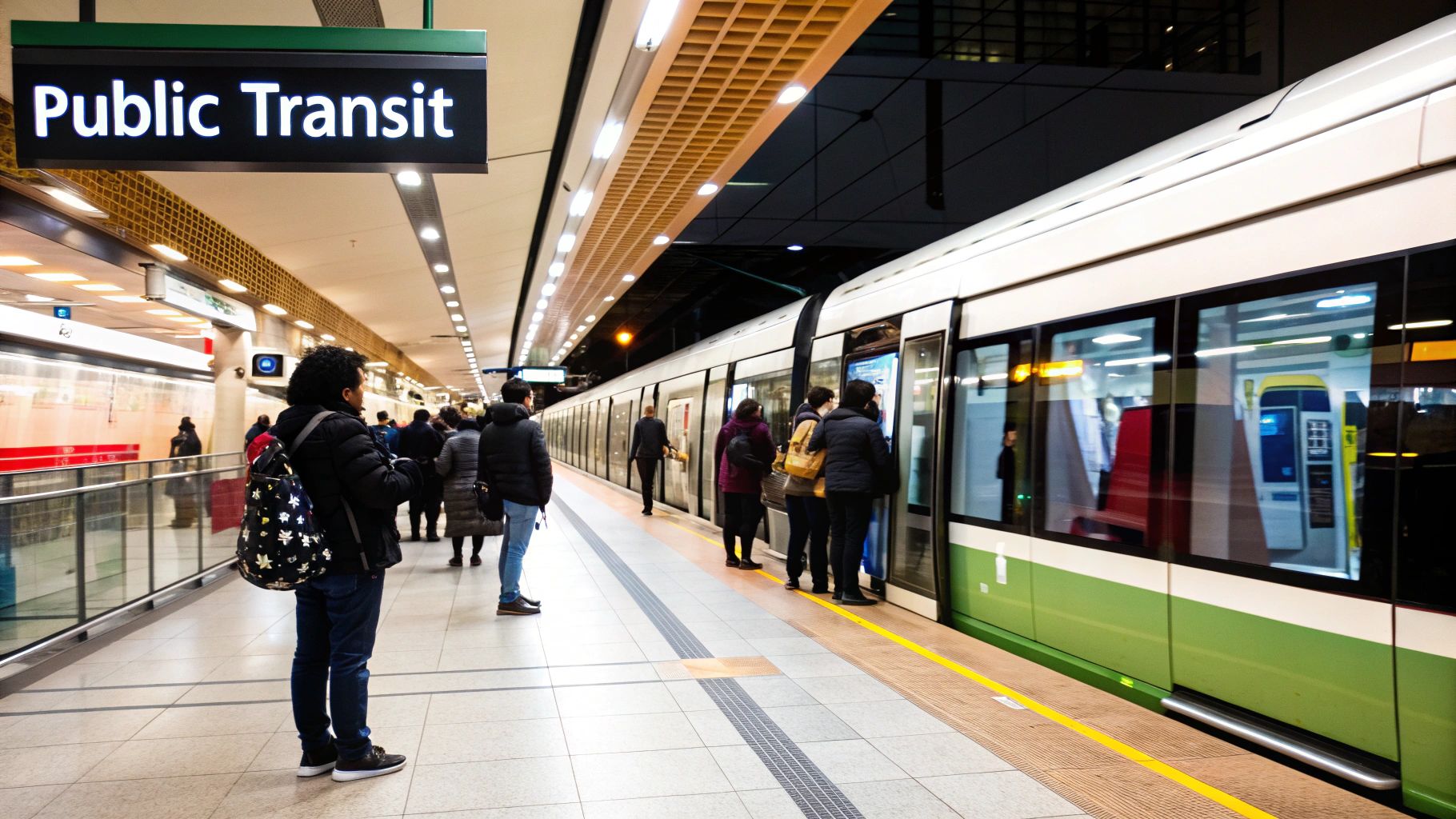
If the thought of sitting in the unpredictable grind of I-5 traffic makes you cringe, the Amtrak Pacific Surfliner is your scenic escape. It completely transforms the trip into a relaxing, productive journey, letting you bypass the gridlock while soaking in some of Southern California’s most iconic coastal views.
Forget gripping a steering wheel for hours on end. On the train, you can use that time to catch up on work, dive into a good book, or just watch the Pacific Ocean roll by your window. It’s a unique way to travel from San Diego to Los Angeles that swaps freeway frustration for genuine comfort and reliability.
Understanding the Onboard Experience
The Pacific Surfliner is built for the modern traveler, whether you’re working or unwinding. Every passenger gets access to complimentary Wi-Fi and power outlets right at their seat, along with surprisingly spacious seating and plenty of legroom.
A highlight for many is the onboard Cafe Car. It’s stocked with a solid selection of snacks, sandwiches, and drinks—including local craft beers and California wines. Being able to grab a coffee or a quick bite without a pit stop makes the whole trip feel seamless. While the train offers undeniable perks, some travelers find that the privacy and door-to-door convenience of a chauffeured vehicle better suits their needs. You can see how the experiences compare in our guide on luxury car services in San Diego.
But let's be honest, the real game-changer is the scenery. The train hugs the coastline for long stretches, especially between Oceanside and San Clemente, delivering panoramic ocean views you just can't get from the freeway.
Coach Versus Business Class
Amtrak offers two main seating options on this route, each designed for different priorities and budgets.
- Unreserved Coach Class: This is the standard, most affordable ticket. Seating is first-come, first-served, but you can almost always find a spot. You still get all the core amenities like Wi-Fi and power outlets.
- Business Class: For a bit more, Business Class gets you a reserved seat, extra legroom, and complimentary snacks and drinks. It’s a fantastic option for business travelers or anyone who just wants a more premium, stress-free experience.
Choosing Business Class is a smart move during peak travel times, like holiday weekends or a Friday afternoon. The reserved seat takes all the guesswork out of finding a good spot, and the extra perks can make the journey feel like a mini-vacation.
The price gap between the two classes can vary, so it’s always a good idea to compare fares when you book. Sometimes the upgrade is surprisingly affordable for the value it adds.
Booking Tips and Station Logistics
The secret to getting the best fare on the Pacific Surfliner is simple: book in advance. Prices work on a tiered system, so the earlier you buy, the less you pay. Waiting until the day of your trip usually means you'll be paying the highest possible price.
The journey itself clocks in at an average of 2 hours and 45 minutes between San Diego and Los Angeles. With multiple departures every day, it’s become a cornerstone of regional travel.
Typically, you’ll start your trip at San Diego's historic Santa Fe Depot and end at the grand Union Station in Los Angeles. Both are major transit hubs, so connecting to local bus routes, metro rail systems (like the LA Metro), or grabbing a rideshare to your final destination is incredibly easy. That connectivity makes the train a practical choice even if your endpoint isn't right next to the station.
Cost-Effective Bus And Shuttle Options
If your top priority is keeping your wallet happy, you really can’t beat the value of a bus or shuttle. For transportation san diego to los angeles, this is hands-down the champion of budget travel, with fares so low they sometimes seem like a typo.
But let’s be real—that affordability comes with a trade-off. You’re swapping the higher cost of other options for a potentially longer trip, fewer amenities, and a schedule that isn’t built around you.
Understanding this balance is everything. If you’re a solo traveler, a student, or just anyone trying to make their travel budget go further, the savings can be a game-changer.
The Intercity Bus Experience
Companies like Greyhound and FlixBus are the big names on the San Diego to Los Angeles route. They're known for their rock-bottom prices, and if you book ahead, you can sometimes snag a one-way ticket for less than $20.
For pure cost-cutters, it's an unbeatable deal. The drive itself usually takes anywhere from three to five hours, but you're at the mercy of the same I-5 gridlock that plagues every other driver on the road.
While you’ll probably get Wi-Fi and power outlets, the experience is strictly no-frills. Expect less spacious seating and a route that might include a few stops, adding to your total travel time.
Key Insight: The bus is a purely functional choice. It’s all about getting from point A to point B for the absolute lowest price. This makes it perfect for travelers with flexible schedules and not a lot of luggage.
Shared Shuttles: Finding a Middle Ground
Shared shuttles sit in a sweet spot between the bare-bones bus and pricier private cars. These services, often operated by smaller local outfits, can offer more specialized routes, like a direct transfer between San Diego International Airport (SAN) and Los Angeles International Airport (LAX).
You’ll pay a bit more than you would for a Greyhound or FlixBus ticket, but you get some clear perks in return. Shuttles usually use smaller vehicles like vans or mini-buses, which means fewer passengers and a much faster boarding process.
This is a fantastic option if you have a specific endpoint in mind, like an airport or cruise terminal. Many of these services provide direct terminal-to-terminal or even door-to-door convenience, striking a nice balance between cost and targeted service.
Comparing Bus and Shuttle Services
So, which one is right for you? It really boils down to the specifics of your trip: your destination, who you're traveling with, and how much you mind a variable travel time. If you’re coordinating for a larger party, looking into the advantages of bus tours for groups can offer some great perspective.
Here’s a quick breakdown to help you decide:
- For the Solo Budget Traveler: The intercity bus is almost always the cheapest way to go. If you're traveling light with a loose schedule, the savings are just too good to pass up.
- For Airport-to-Airport Transfers: A shared shuttle often wins out. It’s designed for exactly this purpose, offering a more direct route and better luggage handling than a standard city-to-city bus.
- For Small Groups: A shared shuttle can provide a more comfortable and personal experience, keeping your group together in one vehicle. For larger groups with more complex needs, a more structured service might be needed, which you can learn about in our overview of private transportation options.
Choosing the Right Travel Option for Your Trip
After weighing the costs, travel times, and comfort levels of each option, the best choice really boils down to your specific needs for the day. There's no single "best" way for transportation from San Diego to Los Angeles; it’s a personal decision based on what you value most. Instead of just summing things up, let's walk through some common travel scenarios to help you pick your ride with confidence.
This infographic lays out the decision-making process, helping you see the best path forward based on your main priority.
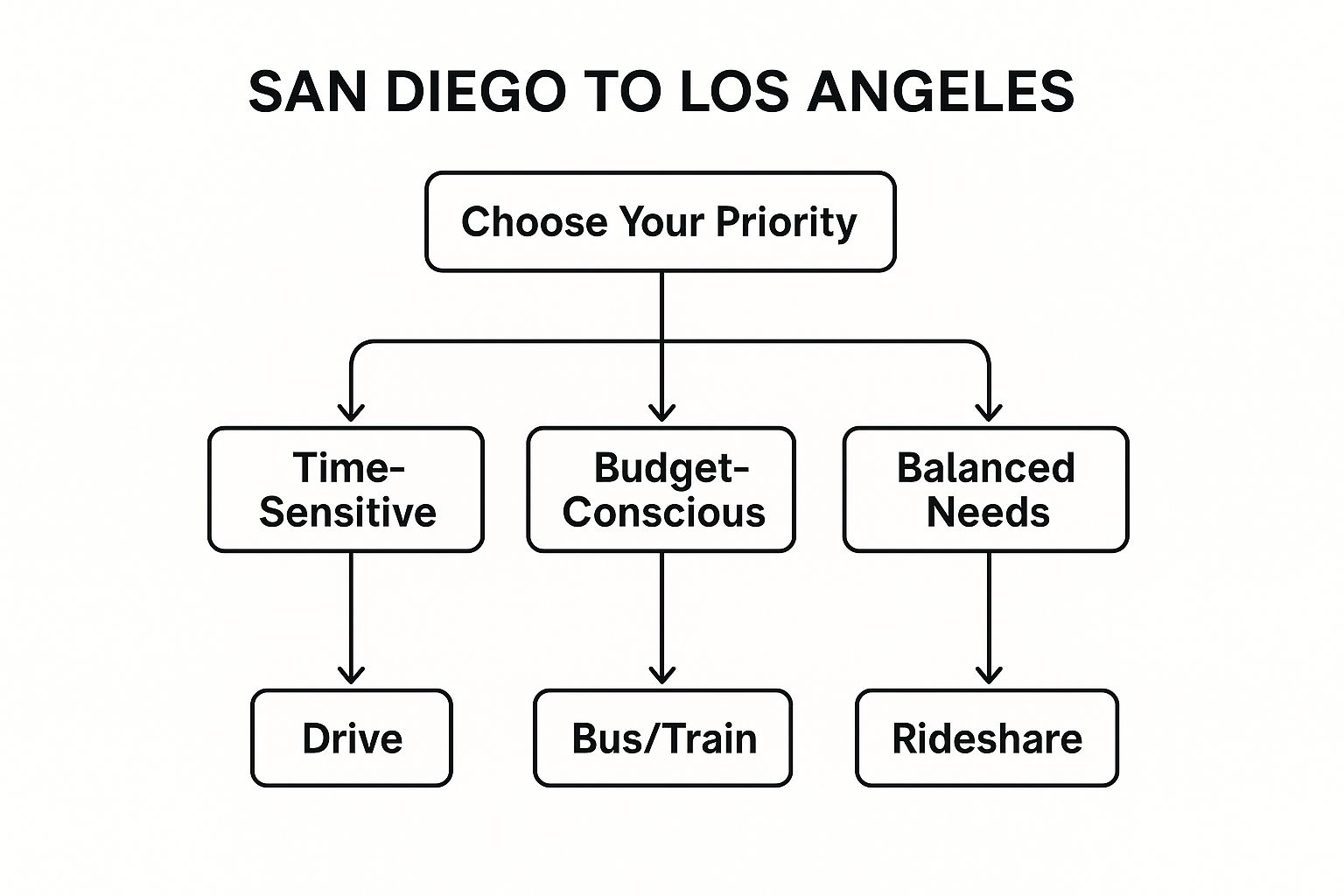
As you can see, it simplifies a complex choice, pointing time-crunched travelers toward driving and budget-first travelers toward public transit.
Matching Your Travel Style to the Right Ride
To give you some truly practical advice, we've broken down our recommendations based on who you are and why you're traveling. Find the profile that sounds most like you to see which option fits your trip perfectly.
The Business Traveler on a Deadline
Your world revolves around productivity and punctuality. You need to show up sharp and ready for meetings, and every minute wasted in traffic is a minute lost.
- Top Recommendation: The Amtrak Pacific Surfliner is your mobile office. With onboard Wi-Fi and power outlets, you can turn travel time into billable hours. The train’s reliable schedule also takes the stress of traffic completely out of the equation, giving you a predictable arrival time.
- Why It Works: It transforms a necessary commute into a productive work session with an ocean view, maximizing your efficiency from door to door.
The Family Heading for an Adventure
You’re probably juggling luggage, snacks, maybe a stroller, and a few kids. Your biggest priorities are convenience and having enough space to haul everything without a second thought.
- Top Recommendation: Driving your personal car or a rental gives you unmatched flexibility. You’re in total control of the schedule, can make pit stops whenever you need to, and have plenty of room for all your gear.
- Why It Works: The freedom to pack what you want and travel on your own timeline is a game-changer when coordinating a family trip.
For families or groups who want a completely stress-free experience without having to navigate I-5, a pre-booked private car service is an excellent alternative. It gives you all the space of an SUV with the welcome relief of having a professional handle the driving.
The Solo Traveler on a Strict Budget
For you, every dollar counts. The main goal is getting from San Diego to LA as cheaply as possible, and you don’t mind trading a little comfort or time for big savings.
- Top Recommendation: An intercity bus like FlixBus or Greyhound is unbeatable on price. With tickets often dipping below $20, the money you save is substantial and can be better spent on your trip.
- Why It Works: It delivers a simple, no-frills journey from point A to B for the absolute lowest cost you'll find.
The Small Group Seeking a Balance
You’re traveling with friends and want a good mix of convenience, affordability, and a shared experience. Dealing with multiple cars and parking sounds like a nightmare you'd rather avoid.
- Top Recommendation: A rideshare service like Uber or Lyft strikes a great balance. Splitting an UberXL or Lyft XL fare between three or four people makes the cost quite competitive, and the door-to-door service is a huge plus. For groups looking for a more polished and luxurious ride, a trusted provider like the one represented by the Pompeii Limousine logo can seriously upgrade the journey.
- Why It Works: It gets rid of all the parking headaches and lets your group travel together without any logistical fuss.
Frequently Asked Questions
Even with all the options laid out, a few questions always pop up when planning the trek between San Diego and Los Angeles. Let's tackle some of the most common ones to help you lock in your travel plans.
What Is the Absolute Cheapest Way to Travel?
If your number one goal is saving money, the intercity bus is your answer. Hands down. Services like FlixBus or Greyhound consistently offer the lowest prices, and you can often snag a one-way ticket for under $20 if you book a couple of weeks out.
Of course, that rock-bottom price comes with a trade-off. The trip usually takes longer because of traffic and multiple stops along the way. Comfort is also more basic compared to the train or a private car, but for a solo traveler with a flexible schedule, it’s tough to beat the value.
How Much Should I Budget for Driving?
Driving your own car? It's easy to just think about the cost of gas, which will probably run you somewhere between $15 and $25 each way. But that's only part of the story.
The real cost of driving emerges when you add parking fees in Los Angeles, which can easily range from $15 to over $40 for a full day. Factoring in vehicle wear and the mental toll of traffic provides a more complete financial picture.
Is the Train Ride Between San Diego and LA Scenic?
Yes, absolutely. This isn't just a train ride; it's an experience. The Amtrak Pacific Surfliner route is famous for its incredible coastal views. For a huge portion of the trip, the tracks hug the Pacific Ocean, giving you breathtaking scenery you just can't see from the I-5 freeway.
That unique vantage point is one of the biggest draws for choosing the train. If you value a premium travel experience, you might weigh this scenic journey against the sheer luxury of a private service, like the one offered by the folks behind the Pompeii Limousine logo.
Are There Direct Shuttles from San Diego Airport to LAX?
There are! Several private and shared shuttle companies specialize in running directly between San Diego International Airport (SAN) and Los Angeles International Airport (LAX). These services are a fantastic middle-ground option.
They completely cut out the headache of wrestling luggage onto public transit or dealing with rental car logistics at both ends. While they cost more than a bus or train ticket, they offer a direct, streamlined transfer that’s perfect if you’re trying to catch a connecting flight.
For a truly seamless and luxurious travel experience between San Diego and Los Angeles, consider the premium services offered by Pompeii Limousine. Book your private, chauffeured ride today at https://pompeiilimousine.com.


