
Every year, millions of professionals jet off for business meetings in unfamiliar cities, carrying not just laptops but a host of risks. Most people focus on missing flights or lost luggage, but the real dangers are far more serious. According to the CDC, proactive travel safety planning can significantly reduce threats that travelers face on the road. And the surprising part is that sometimes, the smallest precautions make the biggest difference.
Table of Contents
- What Are Business Travel Safety Tips And Why Are They Important?
- Understanding Risks Associated With Business Travel
- Key Concepts Of Personal Safety In Corporate Travel
- How Cultural Awareness Enhances Business Travel Safety
- The Role Of Technology In Ensuring Business Travel Security
Quick Summary
| Takeaway | Explanation |
|---|---|
| Prioritize personal safety protocols | Establish guidelines for maintaining safety during travel, addressing health, digital security, and emergency response. |
| Conduct risk assessments before travel | Evaluate potential safety threats related to the destination’s geography, culture, and political climate. |
| Enhance cultural awareness | Understand local customs and practices to navigate social dynamics and prevent misunderstandings while traveling. |
| Leverage technology for security | Utilize digital tools such as encryption and GPS tracking to ensure safety and protect sensitive information. |
| Maintain open communication channels | Set up reliable ways to contact emergency services and keep in touch with family or colleagues during your travels. |
What Are Business Travel Safety Tips and Why Are They Important?
Business travel safety tips are strategic guidelines and preventive measures designed to protect professionals during work-related trips. These comprehensive recommendations address potential risks that travelers might encounter while navigating unfamiliar environments, ensuring personal security, health, and professional continuity.
Understanding the Critical Nature of Travel Safety
In today’s interconnected global business landscape, professionals frequently travel to different cities and countries. While these journeys represent opportunities for growth and collaboration, they also introduce unique challenges and potential vulnerabilities. Learn more about corporate travel safety protocols that can help mitigate these risks.
Business travel safety encompasses multiple dimensions of protection, including:
- Physical safety in different geographical locations
- Personal health and medical preparedness
- Digital security and information protection
- Emergency response and communication strategies
According to the Centers for Disease Control and Prevention, proactive safety planning is crucial for minimizing potential threats during professional travel. By understanding and implementing targeted safety strategies, business travelers can significantly reduce their exposure to risks.
Key Motivations Behind Travel Safety Preparation
The importance of business travel safety tips extends beyond mere precaution. These guidelines serve critical functions that protect both individual professionals and their organizations. Companies invest substantial resources in developing comprehensive travel safety protocols because the potential consequences of overlooking safety can be severe.
Key motivations for prioritizing travel safety include:
- Protecting employee well-being and ensuring their safe return
- Minimizing potential legal and financial liabilities for organizations
- Maintaining business continuity and professional reputation
- Providing peace of mind for travelers and their families
By adopting a proactive approach to travel safety, business professionals transform potential vulnerabilities into manageable, strategic opportunities for successful and secure international engagement.
Understanding Risks Associated with Business Travel
Business travel inherently involves complex layers of potential risks that extend far beyond simple logistical challenges. Professionals traversing diverse geographical landscapes encounter multifaceted threats that demand comprehensive understanding and strategic preparation. Check out our comprehensive business travel checklist to mitigate potential risks effectively.
Categories of Travel Risks
Business travel risks can be categorized into several critical domains that require nuanced awareness and proactive management. These risks are not isolated incidents but interconnected challenges that can significantly impact personal safety, professional performance, and organizational objectives.
To clarify the multifaceted risks faced during business travel, the following table organizes key risk categories and describes their potential impact on travelers.
| Risk Category | Description |
|---|---|
| Physical Safety Risks | Exposure to crime, political instability, or transportation hazards |
| Health and Medical Risks | Vulnerability to infectious diseases, limited access to medical care, or health emergencies |
| Cybersecurity Risks | Threats to digital information, data breaches, and technological vulnerabilities |
| Psychological/Stress Risks | Mental health challenges from constant travel, cultural disorientation, and professional pressures |
Key risk categories include:
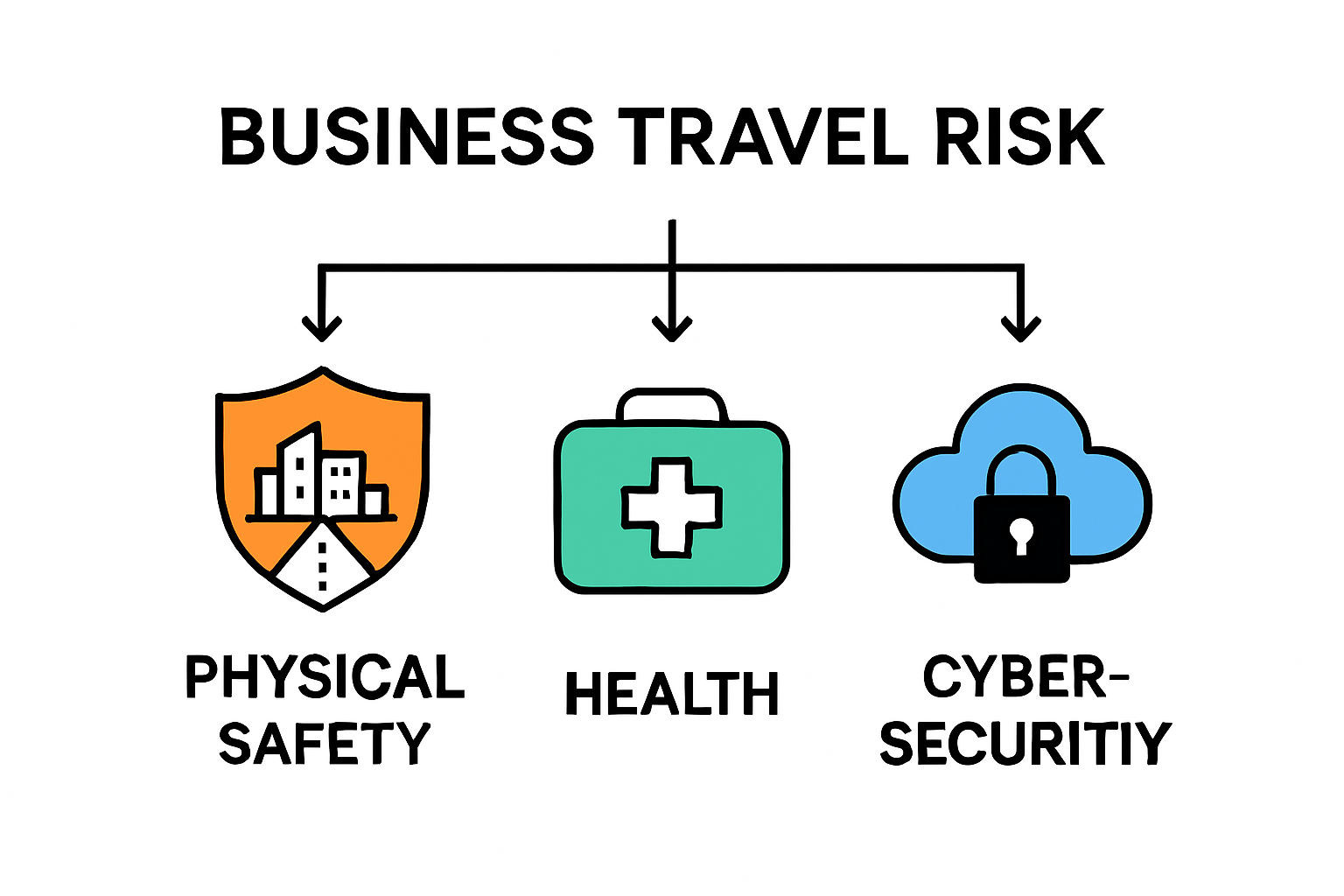
- Physical Safety Risks: Potential exposure to crime, political instability, or transportation hazards
- Health and Medical Risks: Vulnerability to infectious diseases, limited medical access, and potential health emergencies
- Cybersecurity Risks: Threats to digital information, potential data breaches, and technological vulnerabilities
- Psychological and Stress-Related Risks: Mental health challenges arising from constant travel, cultural disorientation, and professional pressures
According to the Centers for Disease Control and Prevention, understanding these risk categories is fundamental to developing effective travel safety strategies.
Contextual Factors Amplifying Travel Risks
Travel risks are not uniform but dynamically influenced by multiple contextual factors. Geographic location, political climate, technological infrastructure, and personal vulnerabilities interact to create unique risk landscapes for business travelers.
Significant contextual risk amplifiers include:
- Unfamiliarity with local cultural norms and communication protocols
- Limited understanding of regional legal and security environments
- Varying technological security standards across different jurisdictions
- Personal health conditions and individual resilience levels
By recognizing these intricate risk dynamics, business professionals can transform potential vulnerabilities into strategic opportunities for safe and successful international engagement. Comprehensive risk assessment, continuous learning, and adaptive preparation remain the cornerstone of effective business travel safety management.
Key Concepts of Personal Safety in Corporate Travel
Personal safety in corporate travel represents a sophisticated approach to protecting professionals during work-related journeys. This comprehensive strategy integrates multiple dimensions of risk management, focusing on proactive prevention and adaptive response mechanisms. Explore our corporate travel safety protocols to enhance your understanding of these critical concepts.
Foundational Elements of Personal Safety
Personal safety during business travel goes beyond simple precautionary measures. It involves a holistic understanding of potential vulnerabilities and developing strategic approaches to mitigate risks effectively. Professionals must recognize that safety is a dynamic process requiring continuous awareness and strategic adaptation.
Key foundational elements include:
- Situational Awareness: Maintaining constant alertness to environmental and contextual changes
- Risk Assessment: Systematically evaluating potential threats before and during travel
- Communication Preparedness: Establishing reliable communication channels and emergency contacts
- Personal Resilience: Developing mental and physical strategies to manage unexpected challenges
According to the Occupational Safety and Health Administration, understanding these foundational elemen
Below is a table outlining foundational elements of personal safety, providing a clear overview of the key concepts travelers should prioritize during corporate trips.
| Element | Explanation |
|---|---|
| Situational Awareness | Staying alert to environmental and contextual changes |
| Risk Assessment | Systematically evaluating potential threats pre- and mid-travel |
| Communication Preparedness | Ensuring reliable ways to contact resources and emergency services |
| Personal Resilience | Developing mental and physical capability to manage unexpected challenges |
ts is crucial for developing comprehensive personal safety strategies.
Strategic Personal Safety Components
Effective personal safety in corporate travel involves integrating multiple strategic components that work synergistically to protect professionals. These components are not isolated tactics but interconnected systems designed to create a comprehensive safety network.
Critical strategic components encompass:
- Comprehensive pre-travel risk intelligence gathering
- Personal security technology and tracking systems
- Cultural adaptation and communication skills
- Emergency response and crisis management preparedness
By embracing these key concepts, business travelers transform potential vulnerabilities into opportunities for safe and successful professional engagement. Personal safety becomes not just a protective measure but a strategic advantage in navigating complex global business environments.
How Cultural Awareness Enhances Business Travel Safety
Cultural awareness transcends traditional safety protocols by providing business travelers with nuanced insights that can prevent potential risks and misunderstandings. It represents a sophisticated approach to personal safety that goes beyond physical protection, focusing on understanding social dynamics and communication contexts. Discover our comprehensive business travel safety guide to learn more about navigating cultural complexities.
The Foundational Role of Cultural Intelligence
Cultural intelligence represents a critical skill set for modern business travelers, enabling professionals to interpret and navigate complex social environments effectively. This sophisticated form of awareness allows travelers to anticipate potential challenges and adapt their behaviors to minimize risks.
Key dimensions of cultural intelligence include:
- Cognitive Understanding: Developing knowledge about different cultural norms and expectations
- Behavioral Adaptability: Modifying communication and interaction styles appropriately
- Emotional Resilience: Managing personal reactions and maintaining composure in unfamiliar situations
- Strategic Interpretation: Reading subtle social cues and contextual nuances
According to the U.S. Department of State, understanding local customs and expectations is fundamental to ensuring personal safety during international travel.
Practical Applications of Cultural Awareness
Cultural awareness transforms potential vulnerabilities into strategic advantages by providing travelers with deeper insights into local social dynamics. This approach goes beyond surface level understanding, enabling professionals to make informed decisions that enhance personal safety and professional effectiveness.
Practical cultural awareness strategies include:
- Researching local legal and social expectations before travel
- Understanding non-verbal communication differences
- Recognizing potential cultural sensitivities in professional interactions
- Developing flexible communication strategies
By integrating cultural awareness into travel safety protocols, business professionals can navigate complex global environments with confidence and strategic intelligence. Cultural understanding becomes a powerful tool for mitigating risks and creating meaningful professional connections across diverse international landscapes.
The Role of Technology in Ensuring Business Travel Security
Technology has transformed business travel security from a reactive approach to a proactive, intelligent system of protection and risk management. Modern technological solutions provide comprehensive safeguards that extend far beyond traditional security measures, creating sophisticated defense mechanisms for professionals navigating complex global environments. Explore our advanced corporate travel safety protocols to understand cutting-edge technological protection strategies.
Digital Security Infrastructure
Digital security represents a critical foundation for comprehensive business travel safety. These technological systems create multiple layers of protection, addressing vulnerabilities across communication, data management, and personal tracking domains. Contemporary digital security infrastructure integrates advanced technologies to provide real-time monitoring and rapid response capabilities.
Key technological security components include:
- Encryption Technologies: Protecting sensitive communication and data transmission
- Geolocation Tracking: Enabling real-time professional location monitoring
- Multi-Factor Authentication: Preventing unauthorized device and network access
- Virtual Private Networks (VPNs): Securing internet connections in public and international environments
According to the Global Business Travel Association, technological solutions are increasingly crucial in mitigating cybersecurity risks during business travel.
Integrated Safety Technologies
Integrated safety technologies represent a holistic approach to business travel security, combining multiple technological platforms to create comprehensive protection ecosystems. These systems leverage artificial intelligence, machine learning, and real-time data analysis to anticipate and neutralize potential security threats before they materialize.
Strategic technological safety approaches encompass:
- Artificial intelligence threat detection algorithms
- Comprehensive emergency communication platforms
- Predictive risk assessment technologies
- Automated travel monitoring and alert systems
By integrating advanced technologies into travel security protocols, business professionals transform potential vulnerabilities into strategic advantages. Technology becomes a powerful ally in navigating complex global business landscapes, providing unprecedented levels of protection and peace of mind.
Transform Business Travel Safety Knowledge Into Action With Luxury and Security
Reading about business travel safety tips is a crucial first step. Yet the reality sets in when you have to arrange ground transportation that truly delivers on those safety promises. Every traveler worries about unfamiliar routes, unpredictable drivers, and keeping personal security as tight as possible, especially when schedules are tight and expectations are high. The article highlights the importance of personal safety, risk mitigation, and strategic planning. The good news is you do not have to face these challenges alone. Explore our Airport Transportation solutions dedicated to elevating both safety and comfort from the first mile to the last.

Why settle for average when your safety deserves a premium standard? Choose Pompeii Limousine and ride with experienced chauffeurs in vehicles designed for security and peace of mind. Every journey is backed by real-time tracking, strict privacy measures, and a fleet maintained to the highest professional standards. Your next step is simple. Visit our website to book your luxury, secure transportation now and ensure your business trip is as safe as it is successful.
Frequently Asked Questions
What are essential business travel safety tips?
Essential business travel safety tips include staying aware of your surroundings, having reliable communication channels, assessing risks before travel, and being prepared with emergency contacts and health resources.
How can cultural awareness improve business travel safety?
Cultural awareness enhances business travel safety by helping professionals understand local customs, communication styles, and potential sensitivities, allowing for smoother interactions and reducing misunderstandings.
Why is digital security important for business travelers?
Digital security is crucial for business travelers as it protects sensitive data and communication from potential cyber threats, ensuring personal information and company data remain confidential and secure during travels.
What are the key risks associated with business travel?
Key risks associated with business travel include physical safety hazards, health-related issues, cybersecurity threats, and psychological stress factors, all of which require proactive management to ensure safe trips.