
Anyone who’s made the drive between San Diego and Los Angeles knows the time can be a total wildcard. The 120-mile stretch of road isn’t the problem—it’s when you decide to tackle it. Realistically, you’re looking at anywhere from a breezy two hours without traffic to a grueling four hours (or more) when everyone else is on the road.
Setting Realistic Drive Time Expectations
Planning this drive is less about your GPS and more about understanding the infamous rhythm of Southern California traffic. Sure, you might hit that magical sub-two-hour window on a late-night run, but that’s the exception, not the rule. Most of the time, your journey is at the mercy of the congestion along the Interstate 5 corridor.
Historically, you could count on about 2 to 2.5 hours in light traffic. But these days, that can easily balloon to 4 or 5 hours during rush hour, turning a simple trip into an all-afternoon affair. To keep your sanity, it's always best to expect delays and plan for the worst-case scenario.
The single biggest mistake travelers make is underestimating rush hour. Leaving San Diego at 4 PM on a Friday isn't a drive; it's a commitment to sitting in gridlock.
To give you a clearer picture, here’s a quick breakdown of what you can generally expect depending on your timing and route.
San Diego to Los Angeles Drive Time at a Glance
This table provides a quick summary of expected drive times based on route and time of day, helping you plan your trip.
| Travel Time | Best Case (Off-Peak) | Average Case (Moderate Traffic) | Worst Case (Peak Traffic) |
|---|---|---|---|
| I-5 N (The Coastal Route) | 1 hour, 50 mins | 2 hours, 45 mins | 4+ hours |
| I-15 N (The Inland Route) | 2 hours, 10 mins | 3 hours | 4.5+ hours |
As you can see, leaving at the "wrong" time can literally double your time on the road.
Beyond just dodging traffic, being prepared for the journey itself is key. A smooth ride is about more than just a clear road. Having snacks, drinks, and a solid playlist ready can make a world of difference, especially if you get caught in an unexpected jam. For more practical advice on getting your car and yourself ready, check out these essential long-distance driving tips.
Choosing Your Route: The I-5 vs. The I-15
When you're mapping out your drive, you’ll hit the classic Southern California crossroads: do you stick to the coast on the I-5, or head inland on the I-15? This isn’t just a simple choice of scenery; your decision will have a huge impact on your drive time, as each freeway has its own unique rhythm and traffic headaches.
Think of the I-5 as the main artery. It's the most direct shot between the two cities, stretching about 120 miles and giving you some nice glimpses of the Pacific along the way. But that directness is also its downfall. It's the go-to route for just about everyone, which means you're almost guaranteed to hit the infamous bottlenecks around Orange County and near Camp Pendleton.
The I-15, on the other hand, is the scenic detour. It curves inland, taking you up through Temecula and Riverside County before hooking back toward the eastern side of the LA metro. It definitely adds some miles to your odometer, but it can be a brilliant strategic move to sidestep the coastal gridlock, especially if your final stop is somewhere like Pasadena or deeper in the Inland Empire.
Which Freeway Fits Your Trip?
So, which one is right for you? It really boils down to where you're headed in the sprawling maze that is Los Angeles. Your best bet is always to fire up a real-time traffic app just before you pull out of the driveway. For an even better sense of what to expect, checking out a guide on the reverse trip when driving from Los Angeles to San Diego can give you a heads-up on common choke points from the other direction.
To help you decide, here's a quick breakdown of what to expect from each freeway.
I-5 vs. I-15: A Route Comparison
| Feature | Interstate 5 (The Coastal Route) | Interstate 15 (The Inland Route) |
|---|---|---|
| Distance | Shorter, approximately 120 miles. | Longer, mileage varies by destination. |
| Scenery | Offers ocean views, especially through Orange County. | Travels through inland valleys and hills. |
| Typical Traffic | Prone to heavy congestion, particularly at rush hour. | Can be a faster alternative, but has its own choke points. |
| Best For | Destinations in coastal or central LA, like Santa Monica. | Destinations in eastern LA County or the Inland Empire. |
Ultimately, the I-5 offers the shortest path by mileage, but the I-15 can often be the smarter, faster choice depending on the time of day and your specific destination.
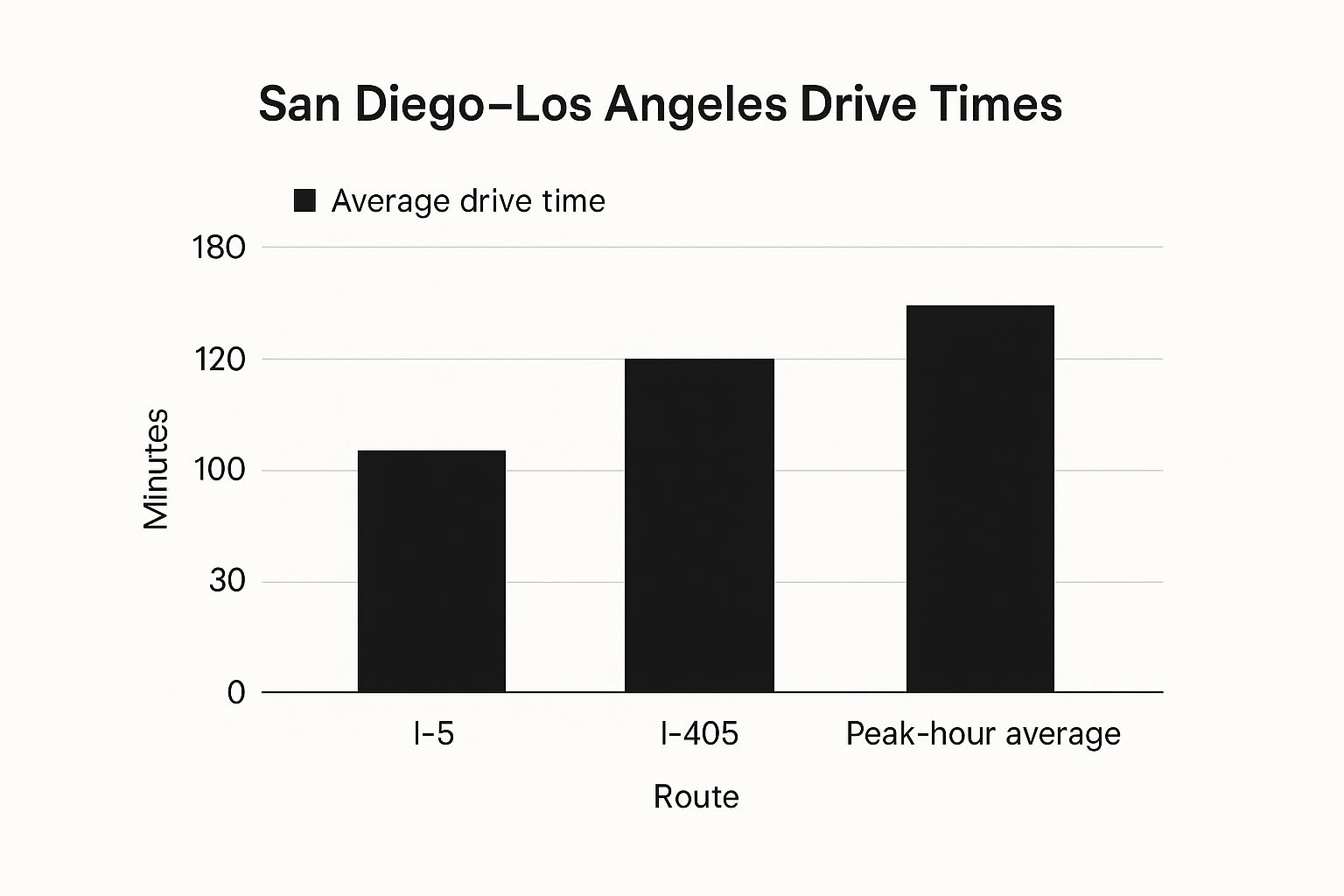
As you can see, even the most direct route isn't always the quickest. Choosing wisely before you start your engine is the first step to a smoother, less stressful journey up the coast.
Mastering Southern California Traffic Patterns
The single biggest factor in your San Diego to Los Angeles drive isn’t the 120-mile distance—it’s the legendary Southern California traffic. Understanding its unique rhythm is the only way to avoid a frustrating, bumper-to-bumper crawl up the coast.
Think of the freeways like rivers. Sometimes they flow freely, but most of the time, they’re hopelessly jammed.
These jams aren't random, though. They follow predictable daily and weekly patterns tied directly to the region's massive commuter culture. In fact, historical data shows that commute times have been steadily getting worse for decades. Between 1990 and 2000 alone, average commutes in Los Angeles County shot up by about 11%, a trend that continues to define today’s gridlock. You can dig into the specifics with this report on California's commute time trends.
This long history has created well-defined peak hours that you absolutely must avoid if you can. Shifting your departure time by just 60 minutes can mean the difference between a smooth trip and a multi-hour nightmare.
The Commuter Crush Windows
The worst congestion windows are locked into the standard workday. These are, without a doubt, the worst times to be on the I-5 or I-15 heading into or out of the major urban centers.
- Northbound Morning Rush (6:00 AM – 9:00 AM): This is prime time for San Diego and Orange County residents heading north for work in LA. The freeway gets completely saturated, especially as you push through Orange County.
- Southbound Evening Rush (3:00 PM – 7:00 PM): The commute home is often even worse. The workday ends and everyone floods the freeway at once. On a Friday, this window can easily stretch even later into the evening.
Trying to leave San Diego at 4 PM on a weekday is a surefire way to stare at brake lights for hours. The best strategy is to plan your drive around these peaks, not through them.
But the daily grind isn't the only trap. Weekend travel brings its own set of challenges, particularly for anyone heading to or from LAX. For more specific advice on that route, check out our guide on the drive from LAX to San Diego. The Friday afternoon getaway, which can start as early as 1 PM, and the Sunday evening return surge, from 3 PM onward, can be just as bad as any weekday rush hour.
Turning the Drive into an Adventure with Smart Stops
Let’s be honest, the drive between San Diego and Los Angeles isn't always the most thrilling part of a trip. But it doesn't have to be a monotonous countdown of miles, either. With a little bit of planning, you can transform this necessary commute into a memorable slice of your Southern California experience.
The trick is to stop thinking of it as just a drive and start seeing it as an opportunity. Instead of just pulling over for gas when the tank is low, think of your stops as mini-adventures. Building an extra hour or two into your schedule opens up a world of possibilities just a few exits off the freeway.
Coastal Charm and Convenient Breaks
Cruising up the I-5? You're in luck. This route is dotted with classic beach towns that offer the perfect excuse to stretch your legs and breathe in some fresh ocean air. These aren't just pit stops; they're a refreshing dose of scenery.
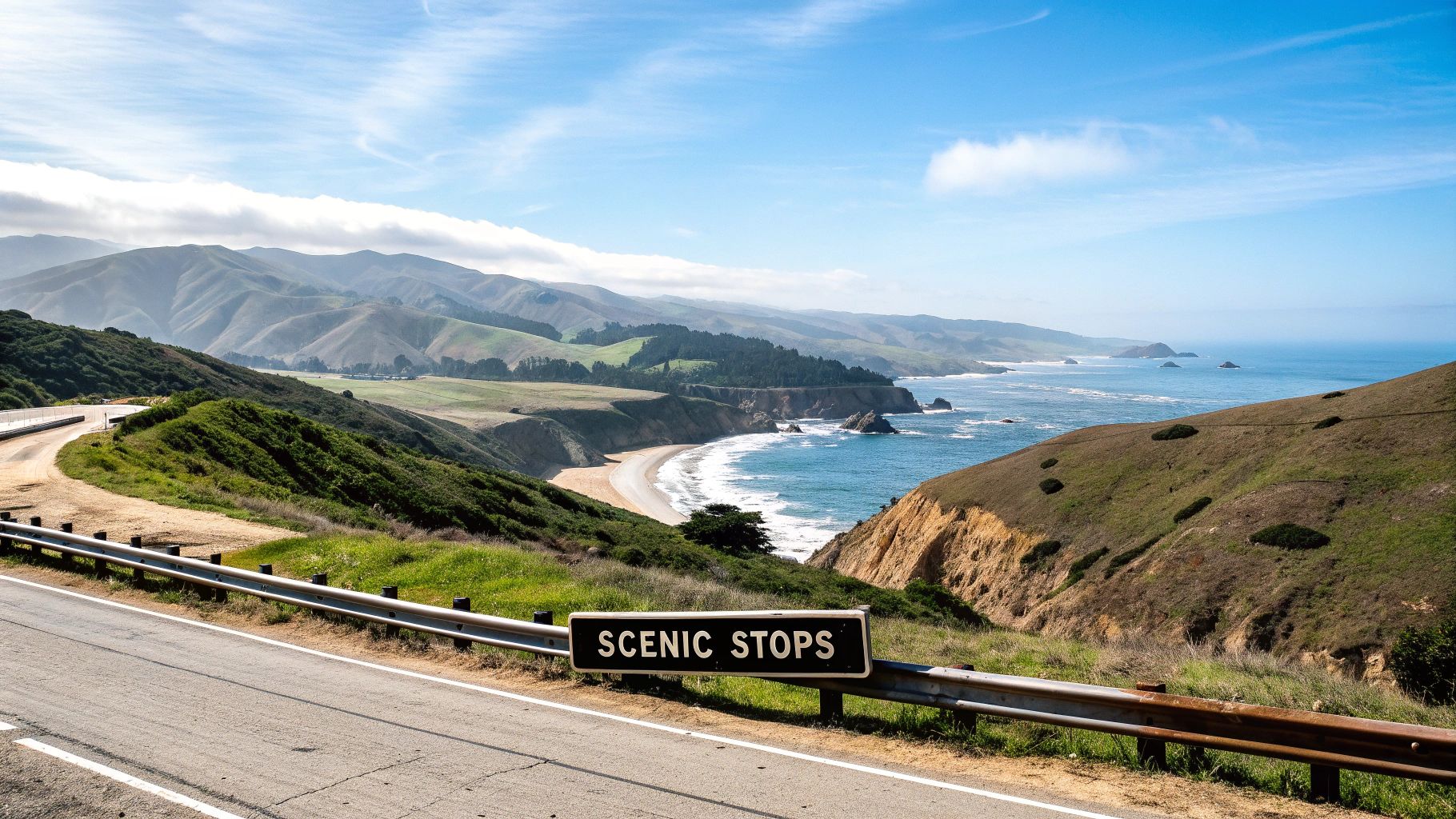
- San Clemente: Known for its gorgeous Spanish Colonial architecture and iconic pier, it’s an ideal spot for a quick, scenic walk to break up the drive.
- Dana Point: This charming harbor is perfect for grabbing a coffee and just watching the boats drift in and out. It's pure relaxation.
- Carlsbad: Home to some fantastic premium outlets, it’s a great chance for some retail therapy if you need to shake off the road fatigue.
Smart stops do more than just fight off driver fatigue; they turn dead time on the freeway into an active, enjoyable part of your vacation.
If your journey takes you inland along the I-15, you’ll be passing right through the heart of Temecula, one of California’s most beloved wine regions. While a full day of tasting might not fit the schedule, even a quick stop can be a delightful detour. It might even inspire a future trip—exploring options for San Diego to Temecula wine tours is a great way to plan a dedicated visit.
For a more substantial break that includes a great meal, the Irvine Spectrum Center is a fantastic choice. It’s packed with quality restaurants, making it the perfect place to plan a lunch or dinner. You can enjoy a fantastic meal and cleverly sidestep the worst of the rush-hour gridlock.
Using Tech and Pro Tips to Beat the Traffic
Leaving your San Diego to Los Angeles drive time up to fate is a surefire recipe for a headache. The trick is to actively manage your trip with the right tools and strategies, just like a seasoned SoCal commuter. Think of it less as a drive and more like a chess match against the traffic—you have to anticipate the next move.
Your smartphone is easily your most valuable copilot for this trip. Apps like Waze and Google Maps are non-negotiable, but their real power goes beyond just telling you where to turn. Before you even pull out of the driveway, play around with their "depart at" or "arrive by" features. This lets you see traffic predictions for your intended travel window, helping you pinpoint the absolute best time to leave.
Of course, for those real-time updates to work, you need a solid signal. It's always a good idea to look into comparing phone carriers in the USA to make sure you won't lose connection at a critical moment. A dropped signal right before a major interchange can easily add stress and minutes to your drive.
Proactive Driving Strategies
Beyond the apps, a proactive mindset can shave serious time off your trip. Smart planning is every bit as important as a good GPS signal, a principle that also drives how technology enhances modern chauffeur services.
-
Pre-Departure Check: Don't ever get in the car without a final, real-time traffic check. A sudden pile-up on the I-5 might make the I-15 the clear winner for the day, but you'll only know if you look right before you go.
-
Master the HOV Lane: If you're traveling with at least one other person, the High Occupancy Vehicle (HOV) lane is your best friend. This lane often moves significantly faster than general traffic, especially when crawling through Orange County.
-
Stay Informed on the Go: Keep your eyes peeled for those big electronic freeway signs. They'll flash alerts for accidents, road closures, or SigAlerts up ahead. Being aware lets you make a smart call about whether to exit and try a surface street instead.
The real goal isn't just to follow a route; it's to navigate the flow of traffic. A simple check before you leave and using the HOV lanes can easily cut 30-45 minutes from a gridlocked journey.
Exploring Alternatives to Driving
While driving gives you the most freedom, the notoriously unpredictable San Diego to Los Angeles drive time can feel like a stressful gamble. Luckily, there are some great alternatives that let you trade freeway gridlock for a much more relaxing journey and get that time back.
Hands down, the most scenic and comfortable option is the Amtrak Pacific Surfliner. This train literally glides along the coastline, offering breathtaking ocean views you'd completely miss from the bumper-to-bumper chaos of the I-5. With Wi-Fi and cafe cars onboard, the roughly three-hour trip becomes a chance to work or just unwind, not a battle with traffic.
Other Practical Travel Options
If you're watching your budget, bus services like FlixBus or Greyhound are a cost-effective way to get between the two cities. The trip can take a bit longer, but it completely removes the stress and cost of gas, driving, and parking.
Flying is technically the fastest way to travel, with a flight time of under an hour. But, when you add up the time it takes to get to the airport, snake through security lines, and board, your total door-to-door time often ends up being the same as the train—or even a well-timed drive.
Even with these options, most Southern Californians still reach for their car keys. Back in 2021, nearly 80% of San Diego County residents drove their own cars for their commute, even though public transit commute times were much longer. You can dig into the local data on commute times and transportation methods here.
Choosing an alternative isn't just about dodging traffic; it's about transforming your travel time into a more enjoyable part of your trip.
Ultimately, picking the best transportation from San Diego to Los Angeles is a balancing act between cost, convenience, and your personal tolerance for traffic.
Your Top Questions Answered
What's the absolute best time to drive from San Diego to LA?
If you're looking for that magic window with the least amount of brake lights, aim for the middle of a weekday. We're talking specifically between 10 AM and 1 PM.
This sweet spot lets you dodge the morning commuters heading north and the evening rush heading south. If a midday trip doesn't work, your next best bet is hitting the road late, anytime after 8 PM, when the freeways usually clear out.
Should I take the I-5 or the I-15? Which is faster?
This is the classic SoCal driver's dilemma, and the answer really boils down to where you're going in the massive LA metro area.
As a general rule, the I-5 is your most direct shot if you're aiming for coastal or central spots like Santa Monica, LAX, or Downtown LA. On the other hand, if you're heading to inland or eastern areas like Pasadena or Riverside, the I-15 will likely be your friend and save you some time.
Your GPS is a powerful tool, but its initial estimate doesn't account for sudden accidents. A final check on an app like Waze just before you put the car in drive is the best way to choose the faster route for that specific moment.
Are there any tolls on the drive?
Good news: the main lanes on both the I-5 and I-15 freeways are completely toll-free.
However, you will see Express Lanes on certain stretches of both routes. These lanes charge a variable toll based on how heavy traffic is at that moment. To use them, you'll need a FasTrak transponder mounted on your windshield.
Ready to skip the traffic and travel in comfort and style? Let Pompeii Limousine handle the driving. Book your private car service today.


