
California wedding laws shape every detail of tying the knot, influencing who can marry, where you can say ‘I do’, and even who gets to witness your big moment. Most people are shocked to learn that California offers a confidential marriage license that requires zero witnesses and keeps your union completely private. This flips the usual idea of marriage on its head, showing that privacy and personal choice come first in the Golden State.
Table of Contents
- What Are California Wedding Laws And Why They Matter?
- Key Legal Requirements For Getting Married In California
- Understanding Marriage Licenses And Certificates In California
- Types Of Ceremonies Allowed Under California Law
- Legal Rights And Responsibilities Of Couples In California
Quick Summary
| Takeaway | Explanation |
|---|---|
| Understand marriage license types | Choose between a public license, needing witnesses, or a confidential license, which remains private. |
| Meet legal age and identification requirements | Participants must be at least 18 years old and provide valid government IDs for marriage. |
| Follow ceremony and officiant guidelines | Weddings must be conducted by an authorized officiant and require a mutual declaration of intent. |
| File marriage license promptly | The completed marriage license must be filed with the county recorder within 10 days post-ceremony. |
| Know your legal rights and responsibilities | Marriage in California involves shared property rights and mutual financial obligations between partners. |
What Are California Wedding Laws and Why They Matter?
California wedding laws represent a comprehensive legal framework designed to regulate marriage ceremonies, protect individual rights, and ensure the validity of marital unions across the state. Understanding these regulations is crucial for couples planning to tie the knot, as they impact everything from license procurement to ceremony requirements.
Legal Foundation of Marriage in California
The state’s marriage laws are grounded in a robust legal system that balances personal freedom with structured guidelines.
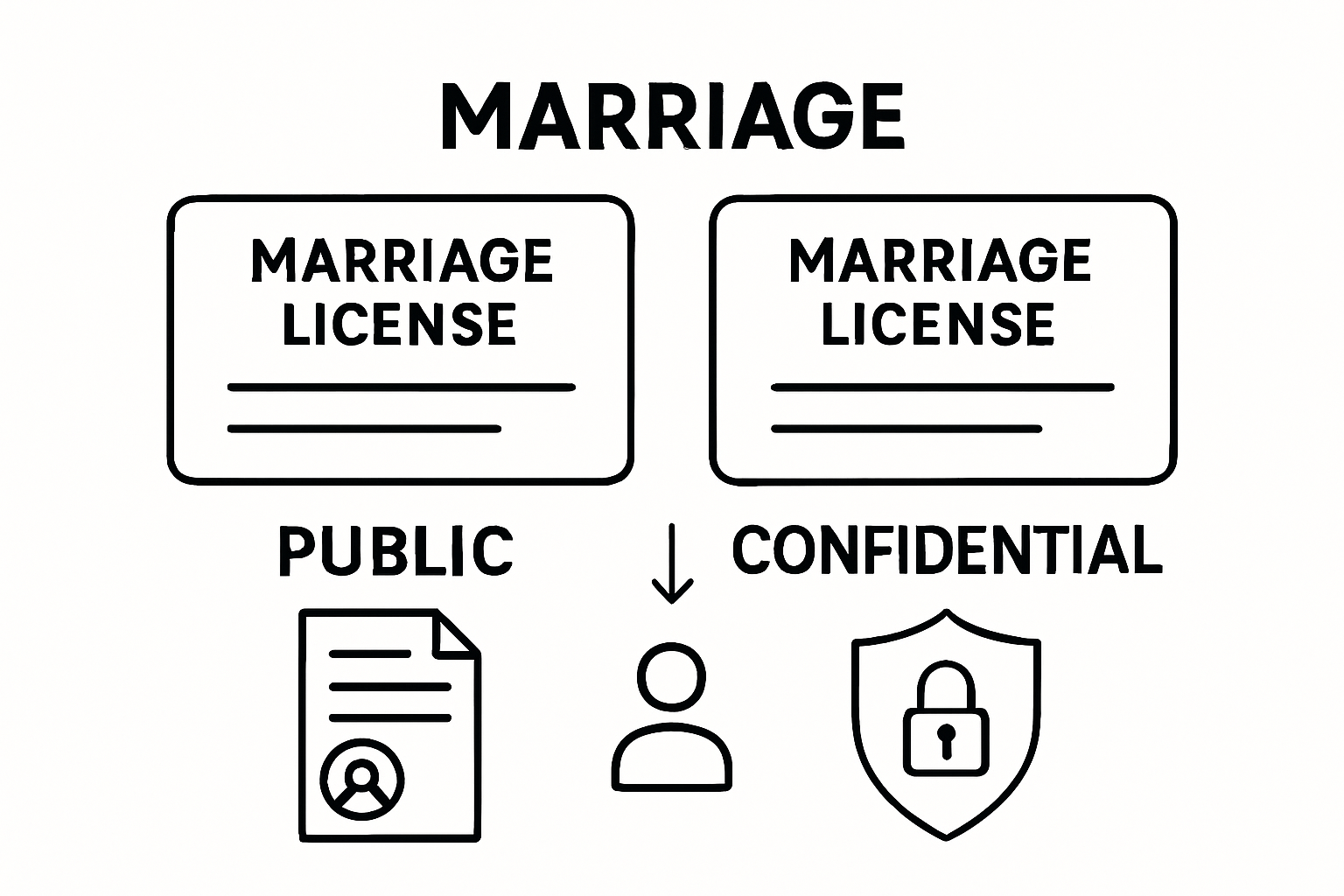
According to the California Department of Public Health, California offers two distinct types of marriage licenses that couples must navigate:
- Public Marriage Licenses: Require at least one witness and become part of public records
- Confidential Marriage Licenses: Do not require witnesses and remain private
These license types provide flexibility while maintaining legal accountability, allowing couples to choose an approach that best suits their personal preferences and privacy needs.
Below is a comparison table outlining the key features and differences between Public and Confidential Marriage Licenses in California.
| License Type | Witness Requirement | Public Record Status | Application Requirement | Validity Period |
|---|---|---|---|---|
| Public Marriage License | At least 1 witness needed | Becomes public record | Must apply in person together | 90 days from issuance |
| Confidential Marriage License | No witnesses required | Remains private | Must apply in person together; couples must live together | 90 days from issuance |
Key Considerations for Legal Marriage
Several critical factors determine the legal validity of a wedding in California. Couples must meet specific requirements to ensure their marriage is recognized:
- Participants must be at least 18 years old (with limited exceptions for minors with parental consent)
- Both parties must provide valid government identification
- The marriage must be performed by an authorized officiant
- The completed marriage license must be filed within 10 days of the ceremony
By understanding and adhering to these wedding budgeting tips, couples can navigate the legal landscape with confidence and ensure their union is both romantic and legally sound.
Ultimately, California wedding laws are designed to protect the rights of individuals entering marriage while maintaining a structured, transparent process for creating lifelong commitments. These regulations reflect the state’s commitment to personal choice, legal clarity, and the sanctity of marital relationships.
Key Legal Requirements for Getting Married in California
Navigating the legal landscape of marriage in California requires understanding a comprehensive set of requirements designed to ensure the validity and integrity of marital unions. These regulations protect individuals and establish clear guidelines for entering into a legally recognized marriage.
Age and Consent Requirements
California law establishes strict parameters regarding who can legally marry. Minimum age is a critical factor in marriage eligibility. According to the California Department of Public Health, individuals must meet specific age criteria:
- Individuals must be at least 18 years old to marry without parental consent
- Individuals between 16-17 years old may marry with explicit parental authorization
- Court approval is required for marriages involving individuals under 16
These regulations aim to protect minors from potential exploitation and ensure that marriage is entered into with full understanding and voluntary consent.
Documentation and Personal Requirements
Preparing for a legal marriage in California involves assembling critical documentation and meeting personal verification standards. Couples must provide:
- Valid government-issued photo identification (driver’s license, passport, military ID)
- Social security number or alternative documentation for non-US citizens
- Proof of termination of previous marriages (divorce decree or death certificate)
- Blood tests are no longer required in California
By understanding these wedding budgeting tips, couples can streamline their marriage preparation process and avoid potential legal complications.
License Procurement and Ceremony Protocols
The final stage of legal marriage in California involves obtaining a marriage license and ensuring proper ceremony execution. Couples must:
- Apply for the license together in person at the county clerk’s office
- Pay the required license fee
- Complete the marriage within 90 days of license issuance
- Have the ceremony performed by an authorized officiant
- File the completed marriage certificate with the county within 10 days after the ceremony
These structured requirements ensure that marriages are properly documented, legally recognized, and maintain the state’s commitment to transparent and accountable marital processes.
Understanding Marriage Licenses and Certificates in California
Marriage licenses and certificates form the legal backbone of matrimonial recognition in California, serving as critical documents that validate and record the formal union between two individuals. These official documents not only symbolize a couple’s commitment but also establish crucial legal protections and rights.
Types of Marriage Licenses
California offers two distinct marriage license options, each designed to accommodate different privacy and documentation preferences. According to the California Courts, couples can choose between:
- Public Marriage License: Becomes part of public records and requires at least one witness
- Confidential Marriage License: Remains private and does not require witnesses
Important Considerations: Both license types have a 90-day validity period from the date of issuance, during which the marriage ceremony must be completed. Couples must apply together in person at their local county clerk’s office.
Documentation and Processing
Obtaining a marriage license involves a structured process with specific documentation requirements. Couples must prepare and present:
- Valid government-issued photo identification
- Social security numbers or alternative documentation
- Payment for license processing fees
- Proof of prior marriage termination (if applicable)
By understanding these wedding budgeting tips, couples can efficiently navigate the administrative aspects of their marriage preparation.
Marriage Certificates: Legal Proof of Union
After the wedding ceremony, the marriage license transforms into an official marriage certificate. This document serves multiple critical functions:
- Provides legal proof of marriage
- Required for changing names on official documents
- Necessary for updating marital status on government records
- Essential for inheritance and legal rights
The officiant must return the signed license to the county within 10 days of the ceremony, after which the county will issue the official marriage certificate. Couples can typically request certified copies from the county recorder’s office for future legal and personal needs.
Types of Ceremonies Allowed Under California Law
California’s marriage laws provide remarkable flexibility in how couples can solemnize their union, reflecting the state’s commitment to personal choice and cultural diversity. The legal framework allows for multiple ceremony types while maintaining essential requirements that ensure the marriage’s legal validity.
Authorized Wedding Officiants
According to California Family Law, the state recognizes a broad range of individuals authorized to perform wedding ceremonies:
- Religious clergy members (priests, rabbis, ministers)
- Judges and magistrates
- County clerks
- Elected government officials
- Commissioners specifically authorized to perform marriages
Critical Requirement: The officiant must be legally authorized and must complete the marriage license documentation to validate the ceremony.
Ceremony Style and Format
California offers remarkable latitude in how wedding ceremonies can be conducted. Couples are not restricted to traditional formats and can design ceremonies that reflect their personal beliefs, cultural backgrounds, and individual preferences:
- Religious ceremonies in places of worship
- Civil ceremonies in courthouses or government offices
- Secular ceremonies in various private or public locations
- Non-traditional venues like beaches, gardens, or private residences
By exploring these wedding budgeting tips, couples can find creative and cost-effective ways to design their ideal ceremony.
Legal Declarations and Witnessing
Regardless of ceremony style, California law mandates specific legal requirements to ensure marriage validity. The core elements include:
- Mutual verbal declaration of marital intent
- Physical presence of the officiant
- Presence of required witnesses (if applicable)
- Signed marriage license completed during or immediately after the ceremony
- License filed with county recorder within 10 days
These structured yet flexible regulations demonstrate California’s approach to marriage: honoring individual choice while maintaining legal integrity and protection for all parties involved.
Legal Rights and Responsibilities of Couples in California
Marriage in California creates a complex legal partnership that extends far beyond the wedding ceremony, establishing a comprehensive framework of shared rights, financial obligations, and mutual responsibilities. Understanding these legal intricacies is crucial for couples entering matrimony.
Property and Financial Considerations
As a community property state, California establishes unique financial guidelines for married couples. According to the California Superior Court, married partners share significant financial rights and responsibilities:
- Assets acquired during marriage are typically considered joint property
- Debts incurred during marriage become shared financial obligations
- Each spouse has equal management and control rights over community property
- Separate property (owned before marriage or inherited) remains individually owned
Important Note: Prenuptial agreements can modify these standard community property regulations, allowing couples to customize their financial arrangements.
Personal and Legal Protections
Marriage in California grants couples numerous legal protections and interpersonal rights that extend across multiple domains:
- Healthcare decision-making authority
- Tax filing benefits and potential advantages
- Inheritance rights and estate planning privileges
- Social security and retirement benefit considerations
- Legal standing for medical visitation and emergency decisions
By understanding these wedding budgeting tips, couples can better navigate the financial and legal landscape of marriage.
Mutual Responsibilities and Legal Obligations
Couples in California also assume significant mutual responsibilities that go beyond emotional commitment:
- Financial support and maintenance obligations
- Shared responsibility for family expenses
- Legal accountability for certain joint financial decisions
- Potential spousal support considerations in case of separation
- Shared parental responsibilities for children
These legal frameworks ensure that marriage is not just a romantic union but a structured partnership with clear expectations, protections, and mutual commitments recognized by California state law.
This table summarizes the main legal rights and responsibilities that marriage establishes for couples under California law.
| Category | Rights/Responsibilities |
|---|---|
| Property Ownership | Assets acquired during marriage are joint property |
| Debt Liability | Debts incurred during marriage are shared |
| Legal Decision-Making | Healthcare and emergency decision authority for spouse |
| Tax and Financial Benefits | Eligibility for joint tax filing and potential benefits |
| Inheritance and Estate Planning | Spousal inheritance rights; ability to make estate decisions |
| Parental and Support Obligations | Shared responsibilities for financial support and child care if applicable |
| Prenuptial Modifications | Option to modify property and financial rules with prenuptial agreements |
Make Your California Wedding Seamless and Stress-Free
Planning a wedding under California’s complex marriage laws comes with its own challenges. From navigating legal requirements to bringing your ceremony vision to life, every detail matters. One key pain point highlighted in the article is ensuring all logistics and formalities—such as legal documents, ceremony protocols, and guest experience—come together effortlessly. Your special day deserves not just legal validity but a sense of sophistication and calm that lets you focus on what truly matters.
Imagine arriving at your ceremony in a luxurious limousine, confident that every transportation detail has been handled with care and professionalism. 
Trust Pompeii Limousine to elevate your wedding experience. Our chauffeur-driven fleet ensures timely arrivals, stress-free travel between venues, and a memorable first impression for you and your guests. Check out our wedding services to discover how we can simplify one of your biggest wedding logistics. Secure your booking today and let us handle the journey so you can enjoy your big moment without worry. Visit https://pompeiilimousine.com now and take the next step toward a flawless wedding celebration.
Frequently Asked Questions
What are the requirements to get married in California?
To get married in California, both parties must be at least 18 years old (with exceptions for minors with parental consent), present valid government identification, and have the marriage performed by an authorized officiant. The marriage license must be filed within 10 days after the ceremony.
What types of marriage licenses does California offer?
California offers two types of marriage licenses: Public Marriage Licenses, which require a witness and become part of public records, and Confidential Marriage Licenses, which do not require witnesses and remain private.
What is the process for obtaining a marriage license in California?
To obtain a marriage license in California, couples must apply together in person at the county clerk’s office, provide required documentation (such as IDs and proof of previous marriages if applicable), and pay the license fee. The license is valid for 90 days after issuance.
How can couples customize their wedding ceremony in California?
California allows couples to design their wedding ceremonies flexibly. They can choose from several officiants, including religious clergy, judges, or authorized officials, and can set the ceremony in various venues, including places of worship, courthouses, or unique locations like beaches and gardens.


